How to Hire a Travel Nanny: Finding a Reputable Agency and What to Expect

Short answer: to hire a travel nanny safely, use an agency that screens carefully (identity, background check, verified references, CPR and first aid), interview the nanny yourself, and sign a written agreement covering hours, pay, time off, travel costs and emergencies before you leave. Expect to pay the nanny's flights, accommodation and meals on top of their rate.
A travel nanny looks after your children while your family is away: on a beach holiday, a ski trip, a wedding abroad or a parent's work trip. Done well, it gives parents real time to rest or work and keeps the children's routine steady. Done badly, it puts a stranger in charge of your children in an unfamiliar place. This guide explains how to choose an agency, what to check, what it costs, what to put in writing and how to make the trip work for everyone.
What does a travel nanny do?

A travel nanny is a professional childcarer who travels with your family, or meets you at the destination, and cares for the children for agreed hours. Typical duties include:
- Helping with children on flights and transfers.
- Daily childcare: meals, naps, bath time, bedtime.
- Supervising at the pool, beach or kids' club, and planning age-appropriate activities.
- Evening babysitting so parents can go out.
- Keeping to your routines, rules and any medical or dietary needs.
Housekeeping, cooking for the whole family or caring for children who aren't yours (such as friends' kids on a shared holiday) are extras that should be agreed and paid for separately.
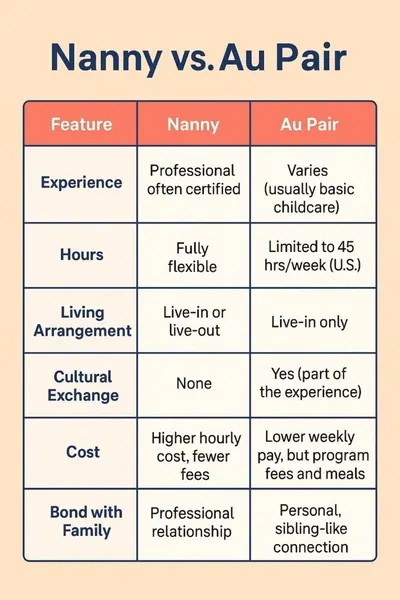
A travel nanny is not the same as an au pair. If you are weighing up the two, read our comparison of travel nanny vs au pair.
Agency or independent nanny?
| Through an agency | Hiring directly | |
|---|---|---|
| Screening | Done by the agency (check exactly what) | You do it all yourself |
| Cost | Agency fee on top of the nanny's pay | No agency fee |
| Backup if the nanny cancels or falls ill | Often offered | Rarely |
| Contract and payment | Often handled by the agency | You draft it and pay the nanny |
| Best for | First-time hires, international trips, short notice | A nanny you already know and trust |
Many families use their regular nanny for trips. That is often the easiest option, because the children already know them. You still need a written travel agreement, as below.
How to find a reputable travel nanny agency
Questions to ask any agency
- How do you screen nannies? Look for an in-person or video interview, identity checks, criminal background checks in every country the nanny has lived in, and references that the agency actually phoned.
- What qualifications do your nannies hold? Current paediatric CPR and first aid is the minimum. Childcare qualifications, water-safety training and experience with your children's ages are pluses.
- Who employs the nanny? Some agencies employ nannies and invoice you. Others introduce you and you become the employer. That affects taxes, insurance and liability.
- What insurance is in place? Ask whether the nanny has liability and travel medical cover, or whether you need to arrange it.
- What happens if something goes wrong? Ask about replacements, refunds and a 24-hour contact during the trip.
- What are all the fees? Get the placement fee, the nanny's rate, overtime, and expenses in writing.
Red flags
- The agency won't tell you how it screens, or says "all our nannies are vetted" without detail.
- You can't speak to or video-call the nanny before booking.
- Pressure to pay the full amount upfront by bank transfer to a personal account.
- No written terms, cancellation policy or contact address.
- Reviews only on the agency's own website.
Interviewing a travel nanny
Even with a good agency, interview the nanny yourself, ideally with a video call that includes your children. Useful questions:
- What travel nanny jobs have you done before? Where, and with children of what ages?
- How do you handle a toddler meltdown on a plane?
- What would you do if a child became ill at night in a hotel abroad?
- How do you keep children safe around pools and the sea?
- How do you handle screen time, snacks and bedtime when routines are disrupted?
- Are you comfortable with our children's specific needs (allergies, medication, additional needs)?
- Do you have a valid passport with enough validity, and any visa issues for our destination?
Then speak to at least two references yourself, preferably families they have travelled with.
How much does a travel nanny cost?
Rates depend on the country, the nanny's experience, the number of children and the hours. Nannies who travel usually charge more than for local work, because they are away from home and on call. Prices are quoted in three main ways:
- Hourly, with a daily minimum.
- A day rate for an agreed number of hours, with overtime beyond that.
- A weekly or trip rate for longer trips.
On top of the rate, the family normally pays:
- The nanny's flights and transfers, in the same class as the children or as agreed.
- Their own room (not a sofa in the children's room) and all meals.
- Agency fees, if you use an agency.
- Travel insurance, if it isn't included.
- Paid days off and travel days, which count as working days.
In the US, if you employ the nanny directly you may be a household employer with tax obligations. The IRS explains the rules in Publication 926, Household Employer's Tax Guide. Other countries have their own rules.
What to put in the travel nanny agreement
- Dates and destination, including travel days.
- Working hours each day, evenings, and how overtime is paid.
- Time off: at least one full day off a week on longer trips, plus daily breaks.
- Pay and expenses: rate, when it's paid, which expenses you cover and how.
- Accommodation: a private room with a lock.
- Duties: what is included and what isn't.
- Safety rules: swimming, car seats, outings, who else may look after the children.
- Medical consent: a signed letter letting the nanny get emergency treatment for the children, plus copies of their insurance details.
- Cancellation: what happens if either side cancels or the trip is cut short.
If a nanny travels internationally alone with your children (for example, flying ahead), many countries and airlines expect a signed parental consent letter. Check the entry rules of your destination and your airline's policy.
Can a travel nanny bring their own child?
Sometimes. Some nannies who are parents take jobs where their own child can come too. This can work for families who want a playmate for an only child, but it changes the job: the nanny's attention is split, and costs (flights, room, food) and insurance increase. If you are open to it, agree on the extra costs, who pays them and how the nanny's child fits into the routine before you book. Most agencies will tell you upfront whether a nanny is looking for this kind of arrangement.
Common myths about travel nannies
- "Only celebrities hire travel nannies." Many ordinary families hire one for a single big trip, such as a wedding abroad or a family reunion, or share one with another family.
- "A travel nanny is just a babysitter on holiday." Good travel nannies are experienced professionals who handle jet lag, illness abroad and unfamiliar safety risks.
- "The nanny is on duty 24/7." They aren't. A tired, overworked nanny is a safety risk. Agree on hours and stick to them.
- "Parents can switch off completely." You remain responsible for your children. The best trips keep regular family time and a daily check-in with the nanny.
Making the trip work

- Do a trial day at home before you leave, if you can.
- Write a one-page brief: routines, allergies, medications, rules, emergency contacts and your hotel details.
- Plan a destination that suits children. Our family vacation ideas for July include plenty of options with kids' clubs and easy beaches.
- Agree on emergency steps. Make sure the nanny knows the local emergency number, the nearest hospital and how to reach you. Our emergency travel safety steps are a good checklist to share.
- Check in daily for five minutes: what went well, what to change tomorrow.
- Treat the nanny as a professional: proper breaks, good food and a thank-you at the end make a nanny want to travel with you again.
Long-term benefits of travelling with a nanny
For families who travel often, a regular travel nanny brings stability. Children get a familiar face in every new place, routines survive time-zone changes, and parents can actually rest or work. Children also get used to travel, new foods and new people in a secure way. Many families build a long relationship with one nanny who joins them every year.
Thinking about it from the other side, or curious what the job involves? Read our travel nanny career guide. More ideas for travelling with children are in Family Travel.
Frequently asked questions
What is a travel nanny?
A professional childcarer who travels with a family, or meets them at the destination, and looks after the children for agreed hours during the trip.
Who pays for a travel nanny's flights and hotel?
The family. On top of the nanny's rate, families normally pay flights, transfers, a private room, meals, agency fees and insurance if it isn't included.
How do I know a travel nanny agency is reputable?
It explains exactly how it screens nannies (identity, background checks, references it has phoned, CPR and first aid), lets you interview the nanny, gives written terms and fees, and offers support or a replacement if something goes wrong.
How many hours a day does a travel nanny work?
Whatever you agree in writing, typically a set number of hours a day with paid overtime for evenings. Nannies are not on duty around the clock and need daily breaks and, on longer trips, days off.
Can a travel nanny bring their own child?
Some do, by agreement. It changes the job and adds costs for flights, room and food, so agree on it in advance.