Travel Prayer for a Safe Journey: Traditional Prayers and How to Write Your Own
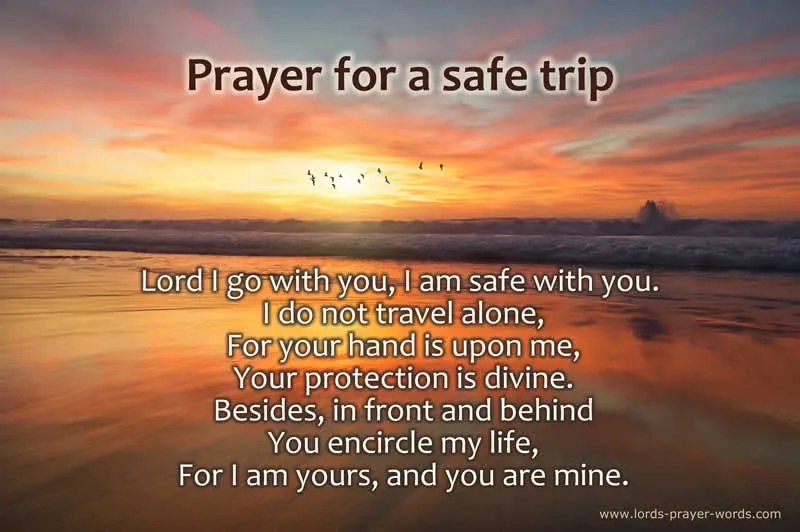
Short answer: a travel prayer asks God to protect you on the way, guide the people who carry you there, watch over those you leave at home and bring you back safely. You can use a traditional one, such as Psalm 121, the Episcopal "Prayer for Travelers", the Jewish Tefilat HaDerech or the Islamic dua for travel, or you can write a few lines of your own. All of these, with ready-to-use examples, are below.
People have prayed before journeys for as long as journeys have been dangerous, and a prayer still does something useful today. It marks the moment you leave, it calms the nerves before a flight, and it reminds you of the people you love before you go. This guide collects well-known travel prayers from several traditions, shows how to write your own, and gives short prayers for flights, road trips and loved ones who are travelling. For readers who don't pray, there is a simple non-religious version as well.
What is a travel prayer?
A travel prayer is a short prayer said at the start of a journey (and sometimes during it or on arrival) asking for safety and a good return. Most traditions share the same few elements:
- Thanks for the trip and the means to make it.
- Protection from accidents, illness, theft and delays.
- Guidance: good decisions, patience and kindness on the way.
- The people at home, who carry the worry while you are gone.
- A safe return. Many prayers end with coming home, not with arriving.
A travel prayer does not replace sensible preparation. Every tradition below assumes you will also check your route, wear your seatbelt and keep your documents safe. The two belong together, and we come back to that at the end.
Traditional travel prayers you can use
Psalm 121: "The Lord shall preserve thy going out and thy coming in"
Psalm 121 is one of the "Songs of Ascents", which pilgrims are traditionally thought to have sung on the road up to Jerusalem. That makes it the classic Jewish and Christian travel psalm. Its last two verses are the part most often read before a trip (King James Version):
"The LORD shall preserve thee from all evil: he shall preserve thy soul. The LORD shall preserve thy going out and thy coming in from this time forth, and even for evermore." (Psalm 121:7-8)
Psalm 91:11 is the other verse travellers often carry: "For he shall give his angels charge over thee, to keep thee in all thy ways."
The Episcopal "Prayer for Travelers"
This prayer from the Episcopal Church's Book of Common Prayer (1979), Prayers and Thanksgivings no. 53, is short, clear and easy to adapt with the names of the people travelling:
"O God, our heavenly Father, whose glory fills the whole creation, and whose presence we find wherever we go: Preserve those who travel [in particular ___]; surround them with your loving care; protect them from every danger; and bring them in safety to their journey's end; through Jesus Christ our Lord. Amen."
Catholic prayers and patron saints
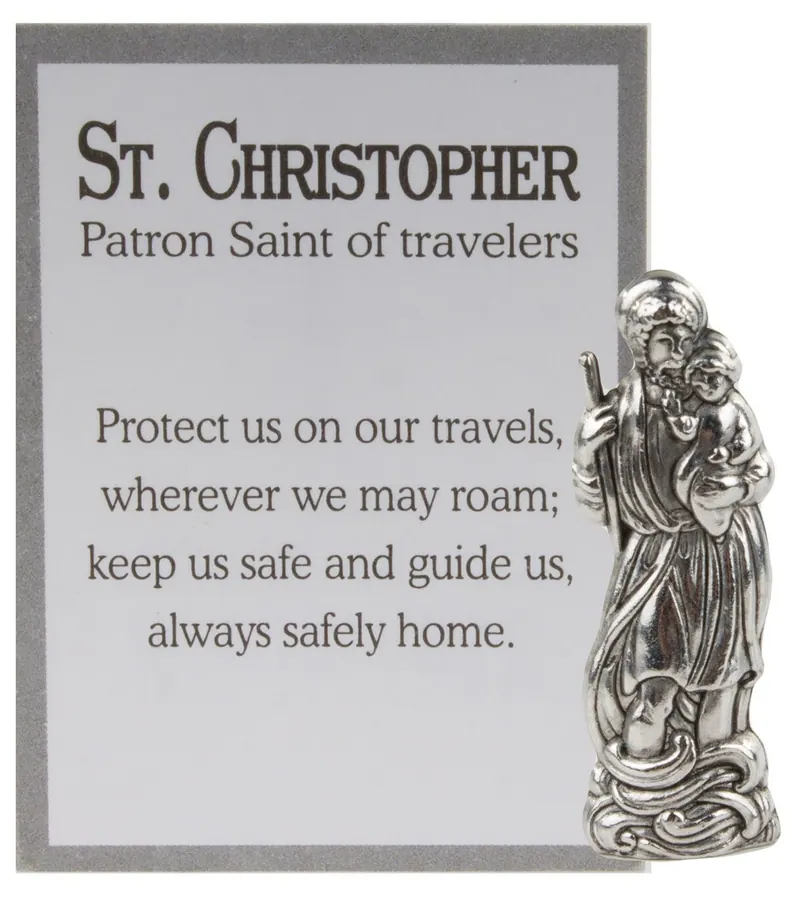
Catholics often ask for the help of saints linked to travel: St. Christopher, the best known; the Archangel Raphael, who guides Tobias on his journey in the Book of Tobit; and Our Lady of Loreto, named patroness of air travellers by Pope Benedict XV in 1920. Our guide to St. Christopher and the patron saints of travellers gives the history and the prayers.
Tefilat HaDerech, the Jewish Wayfarer's Prayer
Tefilat HaDerech comes from the Talmud (Berakhot 29b). It is said once you have left the town or city behind, on a trip of at least a parsa (commonly reckoned at about 4 km or 2.5 miles), and once per day of travel. It opens with a request that God "lead us toward peace, direct our steps toward peace, and bring us to our desired destination in life, joy and peace", and goes on to ask for protection from enemies and dangers on the road. The exact wording and customs differ between communities, so use the version printed in your own siddur, or ask your rabbi when a long trip or a flight raises questions about timing.
The Islamic dua for travel
Muslims say a specific supplication taught by the Prophet Muhammad ﷺ when a journey begins. It starts with Quran 43:13-14, "Glory be to the One who has made this subservient to us…", and asks for an easy journey and protection of the family left behind (Sahih Muslim 1342). Our guide to the dua for travelling gives it in Arabic, transliteration and English, with the duas for leaving home, arriving and returning.
The Irish blessing
The traditional Irish blessing is less a prayer than a farewell, but it is one of the most-loved texts to write in a card for someone leaving: "May the road rise up to meet you. May the wind be always at your back. May the sun shine warm upon your face, the rains fall soft upon your fields, and until we meet again, may God hold you in the palm of His hand."
Other traditions
Many Hindus pray to Ganesha, the remover of obstacles, before beginning anything new, including a journey. Many Buddhists recite loving-kindness (metta) wishes for all beings on the road. If you are travelling with friends of another faith, asking how they mark a departure is a good conversation to have at the start of a trip.
How to write your own travel prayer
A personal prayer can be four sentences. A simple structure that works in any tradition:
- Address: how you normally speak to God ("Lord", "Heavenly Father", "God of our ancestors").
- Thanks: one specific thing ("for the chance to see my grandmother", "for this time off together").
- The journey: name the actual trip and its risks ("the drive through the mountains tonight", "two flights and a tight connection").
- The people: those travelling with you, those at home, and those who carry you: pilots, drivers, crew.
- The return: ask to come home safely, and close as you usually do ("Amen").
Write it on a card or in your phone's notes so it is there at the airport. Rewrite it for each trip; the specific details are what make it yours.
Short travel prayers for specific situations
A prayer before a flight
"Lord, as I board this plane, I place this journey in your hands. Give the pilots and crew clear minds and steady hands, keep the aircraft and everyone on it safe, and calm my heart when the air is rough. Bring me safely to [destination] and, in time, safely home. Amen."
A prayer for a road trip
"God, bless this car and everyone in it. Keep the driver alert and patient, protect us from careless drivers and from our own mistakes, and give us good company and good humour on the long stretches. Bring us safely to [destination]. Amen."
A prayer for a loved one who is travelling
"Father, watch over [name] as they travel to [place]. Go before them, keep them from harm, give them wisdom in every choice, and let them feel your peace when they are tired or far from home. Bring them back to us safe and well. Amen."
A family travel prayer with children
"Thank you, God, for our holiday. Please keep us safe on the way, help us be kind to each other when we are tired, and bring us home happy. Amen."
Children remember a prayer best when it always comes at the same moment, such as buckling up or take-off. Let them add one thing they are looking forward to. If you are planning a trip with kids, our family vacation ideas for July may help.
Prayer for nervous flyers

Many people first look for a travel prayer because they are afraid of flying. Prayer helps most when you combine it with what actually calms the body:
- Pray before the stressful moment. Say your prayer at the gate or after boarding, not only when the turbulence starts. Then you have it to return to.
- Breathe slowly. Breathing in for four counts and out for six, repeated for a minute or two, slows the heart rate. Some people match a short phrase to the breath: "Lord, keep me" on the in-breath, "in your peace" on the out-breath.
- Keep your seatbelt fastened. The US Federal Aviation Administration stresses that most turbulence injuries happen to people who were not buckled in. A fastened belt is the simplest protection you have.
- Understand the noises. The chimes, engine changes and bumps after take-off are routine. Telling the cabin crew you are a nervous flyer is common and they are used to it.
- Get help for severe fear. If the fear stops you from travelling, fear-of-flying courses run by airlines and therapists have good results.
Fitting prayer into a busy itinerary

- Anchor it to fixed moments: leaving the house, take-off, the first night at your accommodation, the drive home.
- Use the waiting time. Security lines, layovers and train journeys are natural quiet moments.
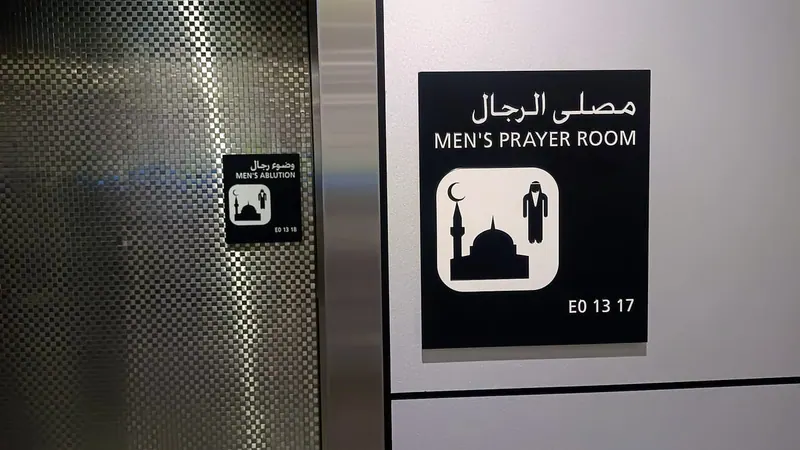
- Find a chapel or prayer room. Many large airports have multi-faith chapels or prayer rooms. Check the airport's website or map before you fly.
- Visit places of worship with respect. If you attend a service abroad, dress modestly, check visiting hours, and don't photograph worshippers without permission.
- Pray for the place. Some travellers end each day with a short prayer of thanks for the people they met.
A non-religious travel ritual
If you don't pray, a short departure ritual gives many of the same benefits: a pause, a clear intention, a calmer start. Before you leave:
- Stop for one minute at the door, phone in your pocket.
- Name your intention for the trip in one sentence ("to rest", "to be present with the kids").
- Think of one person you are grateful to, and send them a message.
- Check the essentials out loud: passport, phone, wallet, keys, medication.
- On arrival, take a few slow breaths and notice three things you can see, hear and smell before you unpack.
Prayer and practical safety work together
Every faith tradition expects you to do your part. A travel prayer goes best with a few practical habits:
- Share your itinerary with someone at home and agree on check-in times.
- US citizens can enrol their trip in the State Department's Smart Traveler Enrollment Program (STEP) to receive safety alerts and be reachable in an emergency.
- Buy travel insurance that covers medical care abroad. If you are on Medicare, read whether Medicare covers you when you travel first: for most trips outside the US, it does not.
- Know what to do if something goes wrong: our emergency travel safety steps walk through the first hours of a crisis.
Find more on faith and travel in our Travel Traditions section.
Frequently asked questions
What is a good prayer for safe travel?
A short, widely used one is the Episcopal prayer: "O God, our heavenly Father, whose glory fills the whole creation, and whose presence we find wherever we go: Preserve those who travel; surround them with your loving care; protect them from every danger; and bring them in safety to their journey's end; through Jesus Christ our Lord. Amen." Psalm 121:7-8 is the classic Bible passage for a journey.
What Bible verse is good for travel?
Psalm 121:8, "The LORD shall preserve thy going out and thy coming in from this time forth, and even for evermore", and Psalm 91:11, "For he shall give his angels charge over thee, to keep thee in all thy ways" (King James Version).
What is the Jewish traveler's prayer called?
It is Tefilat HaDerech, the Wayfarer's Prayer, from the Talmud (Berakhot 29b). It is said once you have left the city on a trip of at least a parsa (about 4 km), once per day of travel.
How do I pray for someone who is travelling?
Name the person and the trip, ask God to protect and guide them, pray for those who will drive or fly them, and ask for their safe return. A sample prayer for a loved one is in the section "Short travel prayers for specific situations" above.
Can prayer help with fear of flying?
Many nervous flyers find that a prayer said at the gate or after boarding, combined with slow breathing and keeping the seatbelt fastened, helps them stay calm. Severe fear of flying responds well to dedicated courses or therapy.