Dua for Travelling: Authentic Islamic Travel Prayers in Arabic and English
Short answer: the main dua for travelling is the one the Prophet Muhammad ﷺ said when he mounted his camel to set out. He said Allahu akbar three times, then: Subhanalladhi sakhkhara lana hadha wa ma kunna lahu muqrinin, wa inna ila Rabbina lamunqalibun… (Sahih Muslim 1342). Other short duas cover leaving home (Sunan Abi Dawud 5095), arriving somewhere (Sahih Muslim 2708) and coming home.
This guide gives each authentic travel dua in Arabic, with a transliteration, an English meaning and its hadith or Quran reference, so you can check every one yourself. It follows a trip in order: leaving the house, getting into the car or onto the plane, the journey itself, arriving, and coming home. At the end are the duas you can say for someone else who is travelling, and a quick reference table.
How we checked: the Arabic and the references below were compared with the hadith collections on sunnah.com and the Quran text on quran.com in October 2026. Translations are ours, kept close to the standard English renderings. Transliterations are only a guide to pronunciation: if you can, learn the Arabic from a teacher or a recording.
The dua for travelling (Sahih Muslim 1342)
Abdullah ibn Umar taught that whenever the Prophet ﷺ settled on his camel to set out on a journey, he said Allahu akbar (Allah is the Greatest) three times and then this supplication. It begins with the words of the Quran, Surah Az-Zukhruf 43:13-14, and continues with a prayer for the journey itself. It is the dua most people mean when they search for "dua for travelling" or "dua safar".
اللَّهُ أَكْبَرُ، اللَّهُ أَكْبَرُ، اللَّهُ أَكْبَرُ. سُبْحَانَ الَّذِي سَخَّرَ لَنَا هَذَا وَمَا كُنَّا لَهُ مُقْرِنِينَ، وَإِنَّا إِلَى رَبِّنَا لَمُنْقَلِبُونَ. اللَّهُمَّ إِنَّا نَسْأَلُكَ فِي سَفَرِنَا هَذَا الْبِرَّ وَالتَّقْوَى، وَمِنَ الْعَمَلِ مَا تَرْضَى. اللَّهُمَّ هَوِّنْ عَلَيْنَا سَفَرَنَا هَذَا وَاطْوِ عَنَّا بُعْدَهُ. اللَّهُمَّ أَنْتَ الصَّاحِبُ فِي السَّفَرِ، وَالْخَلِيفَةُ فِي الْأَهْلِ. اللَّهُمَّ إِنِّي أَعُوذُ بِكَ مِنْ وَعْثَاءِ السَّفَرِ، وَكَآبَةِ الْمَنْظَرِ، وَسُوءِ الْمُنْقَلَبِ فِي الْمَالِ وَالْأَهْلِ
Transliteration: Allahu akbar, Allahu akbar, Allahu akbar. Subhanalladhi sakhkhara lana hadha wa ma kunna lahu muqrinin, wa inna ila Rabbina lamunqalibun. Allahumma inna nas'aluka fi safarina hadha al-birra wat-taqwa, wa minal-'amali ma tarda. Allahumma hawwin 'alayna safarana hadha, watwi 'anna bu'dah. Allahumma antas-sahibu fis-safar, wal-khalifatu fil-ahl. Allahumma inni a'udhu bika min wa'tha'is-safar, wa ka'abatil-manzar, wa su'il-munqalabi fil-mali wal-ahl.
Meaning: Allah is the Greatest (three times). Glory be to the One who has made this subservient to us, for we could never have done it by ourselves, and to our Lord we will surely return. O Allah, we ask You on this journey of ours for goodness and piety, and for deeds that please You. O Allah, make this journey easy for us and fold up its distance for us. O Allah, You are the Companion on the journey and the One who looks after the family left behind. O Allah, I seek refuge in You from the hardship of travel, from a distressing sight, and from an unhappy return to my property and family.
Source: Sahih Muslim 1342; the opening verses are Quran 43:13-14.
What the phrases mean in practice
- "Made this subservient to us": "this" was a camel; today it is the car, train, bus, boat or plane you are sitting in. The point is gratitude: no one could cross an ocean in a few hours by their own power.
- "To our Lord we will return": every journey is a small reminder of the final one. It keeps the trip in proportion.
- "Fold up its distance": a request for the journey to feel short and pass without strain, something anyone who has sat through a long-haul flight will understand.
- "The Companion on the journey and the guardian of the family": you entrust both yourself and the people you leave behind to Allah.
- "An unhappy return": you ask not to come back to bad news about your home, money or family.
Notice that most of the dua uses "we" and "us". It was said for the whole group, and it works naturally when a family or a group of friends travels together: one person can say it aloud while the others listen or say it quietly with them.
Dua when leaving home
Before the journey proper, there is the short dua for stepping out of the house. It is not only for travel (you can say it every time you go out), but it is the natural first step of a trip.
بِسْمِ اللَّهِ، تَوَكَّلْتُ عَلَى اللَّهِ، لَا حَوْلَ وَلَا قُوَّةَ إِلَّا بِاللَّهِ
Transliteration: Bismillah, tawakkaltu 'alallah, la hawla wa la quwwata illa billah.
Meaning: In the name of Allah, I place my trust in Allah; there is no might and no power except with Allah.
Source: Sunan Abi Dawud 5095 (graded sahih by al-Albani). The hadith adds that it is said to the person: "You are guided, defended and protected," and the devils move away from him. A similar narration is in Jami' at-Tirmidhi 3426.
"Tawakkul", trust in Allah, does not mean skipping the practical steps. The well-known teaching is to tie your camel and then trust. For a modern trip that means checking your documents, telling someone your plans and buying the right insurance, then setting off with a calm heart. Our emergency travel safety steps cover the practical side.
Dua when getting into a car, plane, train or ship

The dua from Sahih Muslim 1342 above is the one to say once you are settled in your seat and the journey begins. Many people say the first part (the three takbirs and Quran 43:13-14) every time they get into a vehicle, even for short local drives, and the full version at the start of a real trip.
- By car: say it once you are seated and buckled in. If you are the driver, say it before pulling out, not while reading from a phone in traffic. Your eyes stay on the road.
- By plane: the quiet minutes after boarding, or while the plane taxis, are a good moment. You do not need to say it aloud.
- By ship or boat: some people also recite the words of Prophet Nuh (Noah) when the ark set sail, Bismillahi majraha wa mursaha, "In the name of Allah is its course and its anchorage" (Quran 11:41). This is a Quranic verse that many Muslims recite at sea; the dua from Sahih Muslim 1342 is the one the Prophet ﷺ taught for any journey.
Saying Allahu akbar going up and Subhanallah going down
Jabir ibn Abdullah reported: "Whenever we went up a place we would say Allahu akbar, and whenever we went down a place we would say Subhanallah" (Sahih al-Bukhari 2993).
The Companions did this on hills and mountain passes. Many Muslims today apply the same habit to a plane taking off and coming in to land, to driving up and down mountain roads, or to a lift in a tall building. It costs nothing, keeps the mind on Allah at the moments when nervous travellers feel most tense, and is easy to teach children.
Dua when you arrive at a new place
When you reach your hotel, a relative's house, a campsite or any stopping point, there is a short dua of protection for the place itself.
أَعُوذُ بِكَلِمَاتِ اللَّهِ التَّامَّاتِ مِنْ شَرِّ مَا خَلَقَ
Transliteration: A'udhu bi kalimatillahit-tammati min sharri ma khalaq.
Meaning: I seek refuge in the perfect words of Allah from the evil of what He has created.
Source: Sahih Muslim 2708, narrated by Khawla bint Hakim: whoever stops at a place and says this, "nothing will harm him until he moves on from that place".
It is short enough to say in the taxi queue or as you open the door of your room. Because the hadith speaks of every stopping place, you can repeat it at each stop on a multi-city trip.
Dua when returning home
The same narration in Sahih Muslim 1342 says that when the Prophet ﷺ came back, he said the travel dua again and added these words:
آيِبُونَ، تَائِبُونَ، عَابِدُونَ، لِرَبِّنَا حَامِدُونَ
Transliteration: Ayibuna, ta'ibuna, 'abiduna, li-Rabbina hamidun.
Meaning: We return, repenting, worshipping, and praising our Lord.
Source: Sahih Muslim 1342. A longer version, which begins with La ilaha illallahu wahdahu la sharika lah… and was said at each rise on the road home from Hajj, Umrah or an expedition, is in Sahih al-Bukhari 1797.
A practical way to use it: say it when the plane lands at your home airport or when you turn into your own street. Ka'b ibn Malik also reported that when the Prophet ﷺ returned from a journey during the morning, he went to the mosque first and prayed two rak'ahs before sitting down (Sahih al-Bukhari 3088). If your local mosque is on the way, it is a beautiful way to close a trip.
Duas for someone who is travelling
Many people are looking for words to say to a parent leaving for Umrah, a child flying off to university or a friend starting a road trip. These are the farewell duas the Prophet ﷺ used.
"I entrust your religion to Allah"
أَسْتَوْدِعُ اللَّهَ دِينَكَ، وَأَمَانَتَكَ، وَخَوَاتِيمَ عَمَلِكَ
Transliteration: Astawdi'ullaha dinaka, wa amanataka, wa khawatima 'amalik.
Meaning: I entrust to Allah your religion, your trusts (what you are responsible for), and the last of your deeds.
Source: Sunan Abi Dawud 2600 (sahih, al-Albani) and Jami' at-Tirmidhi 3443. Ibn Umar would take the traveller's hand and say it, "as the Messenger of Allah ﷺ bade us farewell".
"May Allah give you taqwa as your provision"
زَوَّدَكَ اللَّهُ التَّقْوَى، وَغَفَرَ ذَنْبَكَ، وَيَسَّرَ لَكَ الْخَيْرَ حَيْثُمَا كُنْتَ
Transliteration: Zawwadakallahut-taqwa, wa ghafara dhanbak, wa yassara lakal-khayra haythuma kunt.
Meaning: May Allah give you piety as your provision, forgive your sins, and make good easy for you wherever you are.
Source: Jami' at-Tirmidhi 3444 (graded hasan). A man asked the Prophet ﷺ for "provision" before a journey, and each time he asked for more, another line was added.
"I entrust you to Allah, whose trusts are never lost"
أَسْتَوْدِعُكَ اللَّهَ الَّذِي لَا تَضِيعُ وَدَائِعُهُ
Transliteration: Astawdi'ukallah alladhi la tadi'u wada'i'uh.
Meaning: I entrust you to Allah, whose trusts are never lost.
Source: Sunan Ibn Majah 2825, narrated by Abu Hurayrah, who said the Prophet ﷺ bade him farewell with these words.
You can of course add your own words in any language: the person's name, where they are going, and what you hope for them. A personal dua for a loved one does not have to follow a fixed wording.
Why the traveller's dua is special
Abu Hurayrah reported that the Prophet ﷺ said: "Three supplications are answered, there is no doubt about them: the supplication of a father, the supplication of the traveller, and the supplication of the one who has been wronged" (Sunan Abi Dawud 1536, graded hasan; also in Jami' at-Tirmidhi 1905).
So a journey is not only a time to ask for your own safety. Long layovers, delays and quiet hours on a train are a chance to make dua for your parents, your children, friends who are ill, and anything else on your heart. Many travellers keep a short list on their phone so they don't forget anyone.
Praying salah while you travel

Travel duas are separate from the five daily prayers, which stay obligatory on the road. Islam makes them easier for a traveller in two ways:
- Shortening (qasr): the four-rak'ah prayers (Dhuhr, Asr, Isha) can be prayed as two rak'ahs. The Quran mentions shortening prayer on a journey in Surah An-Nisa 4:101.
- Combining (jam'): the Prophet ﷺ combined Dhuhr with Asr and Maghrib with Isha on journeys (Sahih al-Bukhari 1107).
The schools of Islamic law differ on the minimum distance that counts as travel, how many days you can stay before you count as a resident again, and whether combining is allowed without real need. Rather than rely on a single number from a blog, ask the imam of your mosque or a scholar you trust which opinion to follow, especially before a long stay abroad. A prayer-time app with a qibla compass, set to your destination's time zone, solves most of the practical problems on arrival.
Quick reference: which dua, when
| Moment | What to say | Source |
|---|---|---|
| Leaving home | Bismillah, tawakkaltu 'alallah, la hawla wa la quwwata illa billah | Abu Dawud 5095 |
| Starting the journey (in the vehicle) | Allahu akbar ×3, then Subhanalladhi sakhkhara lana hadha… (full travel dua) | Muslim 1342; Quran 43:13-14 |
| Going up (hill, take-off) | Allahu akbar | Bukhari 2993 |
| Going down (descent, landing) | Subhanallah | Bukhari 2993 |
| Arriving at a place to stay | A'udhu bi kalimatillahit-tammati min sharri ma khalaq | Muslim 2708 |
| Returning home | The travel dua again, plus Ayibuna, ta'ibuna, 'abiduna, li-Rabbina hamidun | Muslim 1342; Bukhari 1797 |
| Seeing someone off | Astawdi'ullaha dinaka wa amanataka wa khawatima 'amalik | Abu Dawud 2600; Tirmidhi 3443 |
| Someone asks you for a dua before travel | Zawwadakallahut-taqwa, wa ghafara dhanbak, wa yassara lakal-khayra haythuma kunt | Tirmidhi 3444 |
Tips for learning and using these duas
- Start with three. If the full travel dua feels long, learn the leaving-home dua, the first line of the travel dua (Quran 43:13-14) and the arrival dua first. Add the rest over a few trips.
- Listen before you read. Transliteration cannot show every Arabic sound. Listen to a recording on a reputable Quran or hadith app, or ask someone at your mosque to read it with you.
- Keep a printed card. A small card in your passport wallet works when your phone is flat or in flight mode.
- Teach children with a routine. Children learn quickly when the same words always come at the same moment: buckling up, take-off, arriving at the hotel.
- Understand what you say. Reading the meaning a few times before the trip makes the dua far more present when you say it.
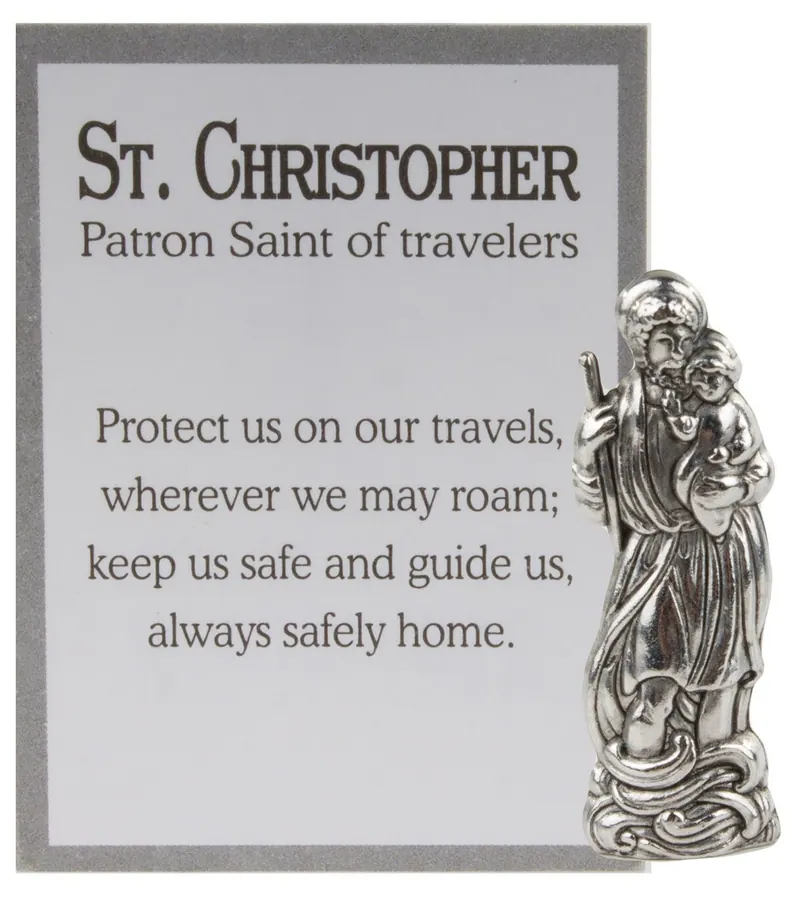
If you are interested in how other faiths mark a journey, we have a guide to travel prayers for a safe journey and another on St. Christopher, the patron saint of travellers. You can find all of them in our Travel Traditions section.
Frequently asked questions
What is the dua for travelling?
The main travel dua is the one in Sahih Muslim 1342: say Allahu akbar three times, then "Subhanalladhi sakhkhara lana hadha wa ma kunna lahu muqrinin, wa inna ila Rabbina lamunqalibun", followed by the requests for an easy journey and protection of your family. The full text is at the top of this guide.
Can I say the travel dua in English or my own language?
The wording taught by the Prophet ﷺ is in Arabic, and it is best to learn it. Most scholars accept personal supplication in any language, so if you have not memorised the Arabic yet you can ask Allah for a safe journey in your own words while you learn it.
Is the travel dua the same for flying?
Yes. The dua was taught for riding a camel, and Muslims say the same words for a car, train, ship or plane. Many also say Allahu akbar on take-off and Subhanallah on landing, following Sahih al-Bukhari 2993.
What do I say when someone leaves for a trip?
Say "Astawdi'ullaha dinaka wa amanataka wa khawatima 'amalik" (I entrust to Allah your religion, your trusts and the last of your deeds), from Sunan Abi Dawud 2600. You can add "Zawwadakallahut-taqwa" (may Allah give you piety as your provision) from Jami' at-Tirmidhi 3444.
What if I forget to say the dua when I set off?
Say it when you remember, as long as you are still travelling. The dua is a sunnah, not a condition of a valid journey, so there is nothing to make up.
Is the dua of a traveller accepted?
A hadith in Sunan Abi Dawud 1536 (graded hasan) lists the supplication of the traveller among three supplications that are answered without doubt, so a journey is a good time to pray for yourself and others.