Solo Travel Japan: Getting Around, Staying and Planning
Short answer: Japan is manageable to explore alone when you plan transport and accommodation around your route. Choose a base or two, then check train connections, lodging availability and seasonal travel dates before booking.
Is Japan easy to travel alone for the first time?
Yes—Japan can be manageable for a first solo trip because it has an extensive rail network and several ways to travel between destinations. The key is to plan around the difference between frequent city service and more limited rural schedules.
For a trip of a week or less, the Japan National Tourism Organization suggests using one base city and taking nearby day trips. With about 10 days to two weeks, a route through Tokyo, Kyoto and Osaka is one option. Keeping the number of hotel changes low can make a solo itinerary easier to manage.
- Choose your route first: Decide which cities or regions matter most before comparing passes or booking stays.
- Check the connections: Look up the specific train, bus or other service for each travel day, especially outside major cities.
- Keep a flexible arrival plan: Confirm your lodging’s check-in details and how to reach it from the station.
If you are comparing independent travel plans, see our guide to planning a solo trip in Europe for another destination-focused checklist.
What is the best way to get around Japan solo?
Use trains for many intercity and city journeys, then consider buses, taxis, bicycles, ferries or domestic flights when they suit your route. Japan’s transport options vary by location, so check the service for each leg rather than assuming one mode covers the whole trip.
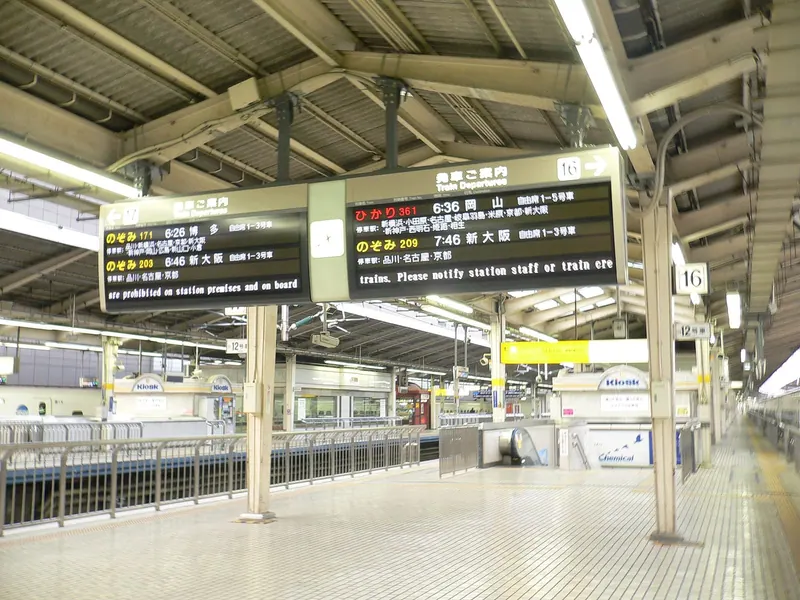
Trains in major cities may run every few minutes, while rural services can be less frequent and need more advance planning. Check departure times and the last available service before a day trip. The JNTO getting-around guide summarizes transport choices.
An IC card can simplify many local trips. At train gates, tap the card when entering and again when exiting. On buses, where and when you tap depends on the fare system. Most regional IC cards work across many areas, but some services and locations do not accept them, so confirm locally before relying on one.
Standard IC cards generally require a ¥500 deposit. Visitor options such as Welcome Suica and TOURIST PASMO are available without a deposit. JR East says Welcome Suica is valid for 28 days from purchase. Check JNTO’s IC card information before you travel.
For local planning, write down the station or stop names for your destination and check whether your IC card is accepted on that route. Keep a backup payment method available for services that require a separate ticket or do not take the card.
Is the Japan Rail Pass worth it for a solo trip?
The Japan Rail Pass is worth comparing with individual tickets when you have several long-distance rail journeys during its consecutive-day validity period. It is available for 7, 14 or 21 days, but a pass is not automatically the best choice for every itinerary.
As of October 1, 2026, adult Ordinary passes purchased through an overseas agency cost ¥53,000 for 7 days, ¥84,000 for 14 days and ¥105,000 for 21 days. Compare the total cost of your planned journeys with the pass price, and check the current checkout amount and purchase channel on the official Japan Rail Pass page.
The pass does not by itself cover Nozomi or Mizuho Shinkansen rides; pass holders need a separately issued special ticket for those trains. If your trip focuses on one region, a regional pass may fit better. JNTO recommends comparing your route and pass coverage before buying.
- List the long-distance journeys you expect to take and the dates you will travel.
- Compare those journeys with the pass’s 7-, 14- or 21-day period.
- Check which trains and services are covered, including any extra ticket requirements.
- Recheck the price at purchase, since the available price can depend on the purchase channel.
For broader cost-planning ideas, our guide to budgeting a two-week independent trip offers a way to organize transport, lodging and day-to-day spending.
Do you need to reserve Shinkansen tickets in advance?
Reserve Shinkansen seats ahead during Japanese holiday periods, when trains can be crowded and some services may offer reserved seating only. For other dates, check the specific train and route before deciding when to buy.
New Year, Golden Week in late April to early May, and summer travel from around mid-July through August are busy periods. Transport and accommodation can be crowded and more expensive then. If your dates overlap with one of these periods, book your lodging early and check seat availability as part of your route planning.

Where should you stay in Japan as a solo traveler?
Choose accommodation based on your route, preferred privacy and access to transport. Business hotels, hostels, ryokan, minshuku, minpaku and temple stays are among the options, but check each property’s listing and location rather than relying on a general label.
Business hotels are typically near train stations, and their compact rooms commonly range from 12 to 20 square meters. Youth hostels welcome travelers of all ages; many have dormitories with four to six beds. Entry-at-night and noise policies vary by hostel, so read the house rules before booking.
A ryokan can be an option for one person, but check that the specific property accepts single-person bookings. Rates are usually charged per person and often include dinner and breakfast. Confirm what your booking includes and whether the property has a minimum-stay or minimum-guest policy before paying. When comparing accommodation, check the room setup, location, house rules and what the rate includes.
- Location: Look at the route from the nearest station and whether it suits your arrival and day-trip plans.
- Room setup: Confirm whether the booking is for a private room or a bed in a shared dormitory.
- Rules: Review check-in times, late-entry policies and any other conditions that affect your schedule.
- Included meals: For a ryokan, verify whether dinner and breakfast are included in the rate.
- Passport procedure: Foreign visitors without a Japanese address must provide nationality and passport number for lodging records, and are asked to show their passport so the property can make a copy.
JNTO’s accommodation guide outlines lodging types and hostel basics. Accommodation prices vary by place, date and room type, so compare options for your exact dates rather than planning around a single assumed daily rate.

How much does solo travel in Japan cost per day?
There is no single daily cost that fits every solo trip; your total depends on where you stay, how far you travel and what you choose to do. Build your estimate from the actual accommodation options and transport legs for your route.
Separate your plan into lodging, local transport, intercity journeys, meals and activities. A night in a dormitory, a private business-hotel room and a ryokan stay are different accommodation choices, and a trip with several long-distance train journeys has different transport needs from a single-city stay.
To make a practical budget, price your likely lodging dates first, then compare transit options for the route. Leave room in the plan for tickets that are not covered by an IC card or rail pass, and check what is included in any accommodation booking.
When is the best time to visit Japan alone?
The best time depends on your preferred dates and tolerance for crowded transport and accommodation. If you want to avoid some of the busiest travel periods, take note of New Year, Golden Week in late April to early May, and the summer period from around mid-July through August.
August and September may bring typhoons that can disrupt travel plans. If you travel then, keep an eye on official travel and weather updates and avoid building a tightly timed itinerary around a single connection. Japan also experiences earthquakes and other natural hazards, so learn where to find local guidance after arrival.
Do U.S. citizens need a visa to visit Japan?
U.S. citizens are on Japan’s short-term visa-exemption list, and the general permitted stay for listed countries not assigned a shorter period is 90 days. Confirm the current entry rules for your passport and purpose of travel with Japan’s Ministry of Foreign Affairs visa information before departure.
Entry requirements can depend on nationality and travel purpose. Check the official guidance before booking or leaving, and keep your passport accessible for check-in and lodging registration.
What should solo travelers know about safety in Japan?
Know how to contact local emergency services and keep your lodging details and route information easy to find. JNTO lists 110 for police and 119 for fire or ambulance emergencies.
The Japan Visitor Hotline provides English-language support 24 hours a day at 050-3816-2787. Save the number before your trip, and review JNTO’s emergency and safety guidance for visitor support and natural-disaster information.
- Save your accommodation address and the contact details for your transport bookings.
- Check rural service schedules and the final connection back to your accommodation before setting out.
- During typhoon season, monitor local updates and allow flexibility in your plans.
- Keep your passport secure but accessible when lodging staff ask to verify and copy it.
For a more general checklist, see our guide to what to do in a travel emergency.
Frequently asked questions
Can I use one IC card throughout Japan?
Many regional IC cards work across multiple areas, but acceptance is not universal. Check the operator and route for each journey before relying on the card.
Can I book a ryokan for one person?
Some ryokan accept solo bookings, but policies vary by property and date. Confirm single-person availability and whether meals are included before you reserve.
How long is Welcome Suica valid?
JR East says Welcome Suica is valid for 28 days from purchase and has no deposit. Check current terms before you travel.
What number should I call for an emergency in Japan?
Call 110 for police or 119 for fire or ambulance. JNTO’s English-language Japan Visitor Hotline is 050-3816-2787 and operates 24 hours a day.