Flying With a New Tattoo: Aftercare, Packing List and What to Avoid
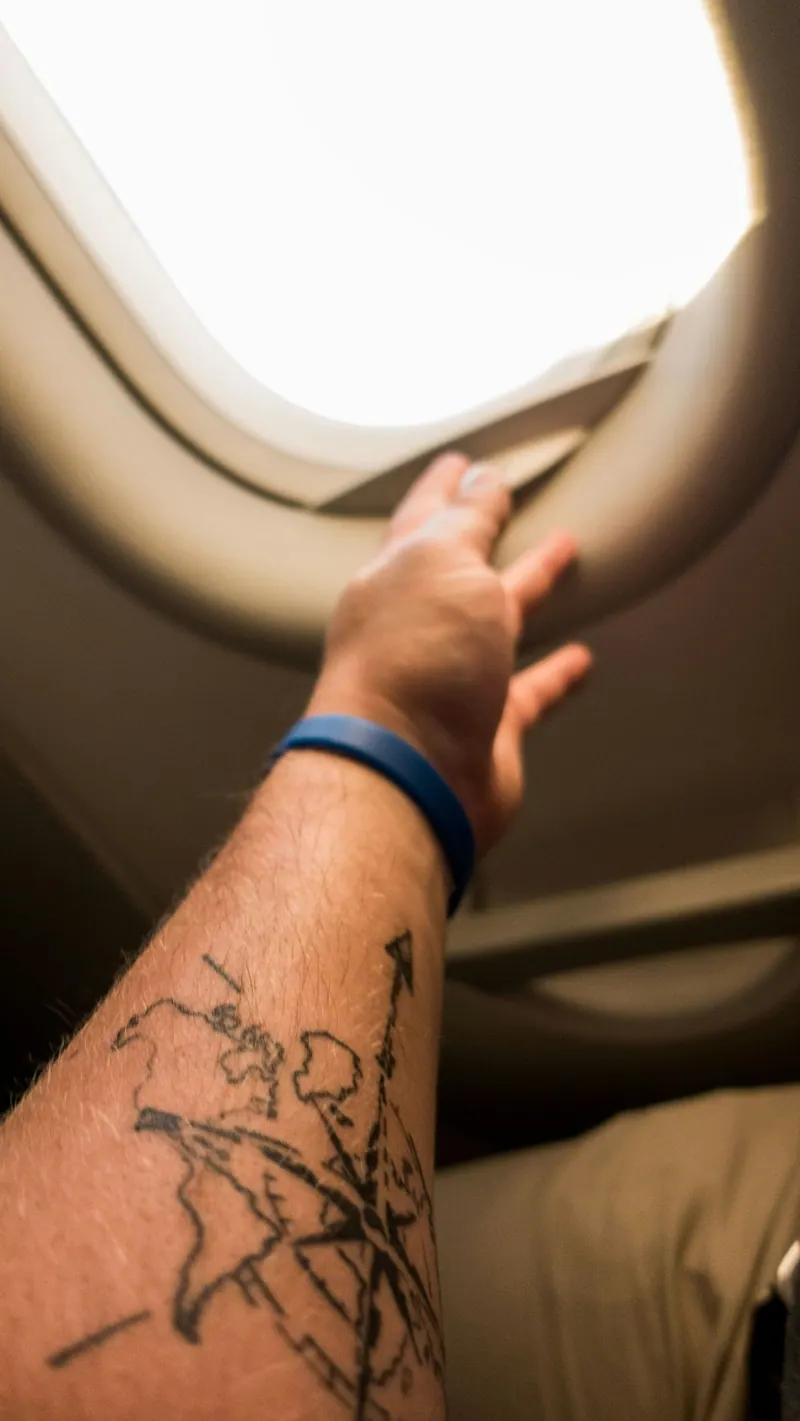
Short answer: you can usually fly with a new tattoo. Flying doesn't damage it: cabin pressure is not a problem for healing skin. The real risks are friction from clothes and seats, dirty hands and surfaces, long hours sitting still, and the sun and swimming at your destination. Keep it clean and lightly moisturised, cover it loosely, pack your aftercare in TSA-size containers, and follow your tattoo artist's instructions.
This is general aftercare guidance, based on what tattoo artists commonly advise and on public guidance such as the American Academy of Dermatology's page on caring for tattooed skin. It is not medical advice. Your artist's instructions come first, and if you have a health condition or signs of infection, speak to a doctor or pharmacist.
Getting tattooed just before a trip is common. Sometimes the trip is the occasion. This guide covers when it is reasonable to fly, what to pack, how to look after the tattoo at the airport and in the air, and what to do (and avoid) once you land.
Is it safe to fly with a new tattoo?
For most people, yes. A fresh tattoo is a shallow wound, and a plane cabin is no worse for it than any other crowded public place. Online claims that "altitude" or "cabin pressure" ruins tattoos have no good evidence behind them. What does matter:
- Friction and pressure: tight waistbands, seat backs, armrests and bag straps rubbing on the healing skin.
- Hygiene: tray tables, armrests and your own unwashed hands.
- Sitting still: on long flights feet and lower legs swell for everyone. A fresh tattoo there may feel tighter and more tender.
- Dry cabin air: the skin can feel tight and itchy, which tempts you to scratch.
- The destination: sun, sea, pools and sweat are far bigger threats to a new tattoo than the flight.
How soon after a tattoo can you fly?

There is no official rule. Many artists are comfortable with a flight the next day for a small or medium piece, as long as you can keep it clean. Others prefer you to wait 24-48 hours, until the first oozing has settled. For large pieces, tattoos on feet, ankles or the back of the thighs, or long-haul flights, waiting a few days makes the journey more comfortable.
The best approach is to plan it with your artist:
- Tell them you are flying and for how long.
- Ask what dressing they will use. Some use a breathable film ("second skin") that can stay on for several days and makes travel much easier. Others use a wrap that must come off after a few hours.
- Ask which products they want you to use, so you can buy travel sizes before you go.
- If you are going somewhere hot and sunny, ask whether it would be better to get the tattoo after the trip. Many artists will say yes.
Tattoo aftercare packing list
In your carry-on
- Gentle, fragrance-free liquid soap in a travel bottle.
- The aftercare balm or lotion your artist recommends, in a container of 3.4 oz (100 ml) or less.
- Clean paper towels or a small pack of tissues for patting dry (airport hand dryers and shared towels are not ideal).
- Hand sanitiser for your hands only, not the tattoo.
- Sanitising wipes for armrests and the tray table.
- Spare non-stick dressing or breathable film, if your artist uses them, plus medical tape.
- A light, loose long-sleeved layer or loose trousers to protect the tattoo from contact and sun.
- Your artist's written aftercare sheet or a photo of it on your phone.
In your checked bag
- Full-size aftercare products for the rest of the trip.
- Broad-spectrum, water-resistant sunscreen (SPF 30 or higher) for after the tattoo has healed.
- Loose cotton clothes that won't rub the area.
- A clean pillowcase or a light cotton cover if you are unsure about bedding at your accommodation.
Liquids rules at security
Creams, balms, gels and liquid soap all count as liquids at US airport security. Under the TSA's 3-1-1 liquids rule, each container must be 3.4 oz (100 ml) or less, and they must all fit in one quart-size bag. Most other countries apply similar limits, though some airports with newer scanners are relaxing them. Check your departure airport before you pack. A solid balm stick is an easy way round the problem.
At the airport
- Clean the tattoo before you leave home, so you start the journey with fresh skin and a fresh, thin layer of aftercare.
- Carry your bag on the other side. Backpack straps and shoulder bags over a fresh shoulder or back tattoo are a common source of rubbing.
- Security screening: you don't need to tell anyone about a tattoo. If a pat-down is needed, you can quietly tell the officer where the fresh tattoo is and ask them to avoid it.
- Wash your hands before touching the tattoo. Airport bathrooms are busy; a quick clean with your own soap and paper towel is better than leaving it for hours.
During the flight
Choose your seat around the tattoo
- Arm tattoo: pick the side where the tattooed arm is away from the aisle (trolleys and passing elbows) and away from your neighbour. A left-arm tattoo is protected in a left window seat; a right-arm tattoo in a right window seat.
- Leg or foot tattoo: an aisle seat lets you stretch and walk more often. Extra legroom helps if you can get it.
- Back tattoo: a small cushion or rolled jumper in the lower back can stop the seat pressing on the area.
Keep it clean and calm
- Wipe down the armrest and tray table before you settle in.
- Keep the tattoo loosely covered with clean clothing or the dressing your artist chose. Don't wrap it in cling film for a long flight unless your artist told you to: it traps sweat and fluid.
- On a long flight, wash your hands, clean the tattoo gently and apply a thin layer of balm when it feels tight. Thin is the key: too much product suffocates the skin.
- Don't scratch, slap or pick at it, however itchy it gets.
Move and drink water
Get up and walk the aisle every hour or two when the seatbelt sign is off, and flex your ankles while seated. This helps with ordinary leg swelling and is also what the CDC recommends to lower the risk of blood clots on long journeys. Drink water regularly. If you are at higher risk of clots, ask your doctor about compression stockings, but don't pull them over a fresh leg tattoo without checking with your artist.
After you land
- Wash it properly once you reach your accommodation: lukewarm water, fragrance-free soap, gentle fingertips, then pat dry with a clean paper towel.
- Let it breathe for a few minutes, then apply a thin layer of aftercare.
- Look at it. Some redness, tenderness and mild swelling are normal in the first days. A bit more puffiness after a long flight usually settles within a day if you rest and raise the area.
- Change into clean, loose clothing and sleep on a clean surface.
Protecting a new tattoo at your destination

Sun
Sunburn on a healing tattoo is painful and can damage it. Keep it covered with loose clothing or shade until it has fully healed. Sunscreen is for healed skin; ask your artist when you can start using it. After that, the AAD advises a broad-spectrum, water-resistant SPF 30+ sunscreen, reapplied at least every two hours, to keep tattoos from fading.
Swimming
Pools, hot tubs, lakes and the sea can all carry bacteria, and soaking softens scabs. Most artists say no swimming until the tattoo has fully healed on the surface, typically two to four weeks and longer for large pieces. Showers are fine; long baths are not. If your trip is built around the beach, as many of our July and November warm-weather trips are, consider booking the tattoo for after you get back.
Heat, sweat and activities
- Sweat isn't dangerous, but rinse it off gently after hikes or hot days.
- Avoid saunas and steam rooms until healed.
- Think about straps: a backpack, harness or snorkel mask strap over the area will rub.
Signs your tattoo needs a doctor
Normal healing involves some redness, swelling, tenderness, flaking and itching. See a doctor, pharmacist or local clinic if you notice:
- Redness that spreads or gets worse after the first few days.
- Increasing pain, heat or swelling instead of gradual improvement.
- Pus, a bad smell, or yellow crusting.
- Red streaks spreading from the tattoo, fever or chills.
- A rash, blisters or raised, itchy bumps that last more than a week or two.
Abroad, a pharmacy is often the quickest first stop, and your travel insurance helpline can direct you to a clinic. Our emergency travel safety steps explain how to find medical help in an unfamiliar country.
Getting tattooed while you travel
If the plan is to get the tattoo on the trip, add these to your checklist:
- Choose a licensed, reputable studio. Look for recent reviews, a clean workspace, single-use needles opened in front of you and a clear aftercare sheet.
- Schedule it near the end of the trip, so you aren't swimming and hiking on a fresh tattoo.
- Respect local rules and culture. Some countries are sensitive about religious imagery. Sri Lanka has deported tourists with visible Buddha tattoos, and many Japanese hot springs (onsen) and gyms still refuse entry to people with visible tattoos.
- Blood donation: some blood services ask you to wait a few months after a new tattoo before donating, especially if it was done abroad or in an unregulated studio. Check with your local service when you get home.
Travelling alone? Our solo female travel safety tips and the rest of the Solo Travel section have more practical advice.
Frequently asked questions
Can you fly with a fresh tattoo?
Usually yes. Cabin pressure does not harm a new tattoo. Keep it clean, lightly moisturised and loosely covered, avoid friction, and follow your artist's aftercare instructions.
How long should I wait to fly after getting a tattoo?
There is no official rule. Many artists are fine with a flight the next day for a small piece. Waiting 24-48 hours, or a few days for large pieces and long-haul flights, makes the trip more comfortable. Ask your artist.
Can I take tattoo aftercare cream on a plane?
Yes. In carry-on luggage each cream, balm or soap must be 3.4 oz (100 ml) or less and fit in one quart-size bag under the TSA 3-1-1 rule. Larger sizes can go in checked baggage, and solid balm sticks avoid the liquids limit.
Should I cover my new tattoo on a plane?
Cover it loosely with clean clothing or the breathable dressing your artist applied, to protect it from contact and dirty surfaces. Avoid wrapping it tightly in cling film for long flights unless your artist tells you to.
Can I swim with a new tattoo on holiday?
Most artists advise no swimming in pools, hot tubs, lakes or the sea until the tattoo has fully healed on the surface, typically two to four weeks or longer for large pieces.
Why is my tattoo swollen after flying?
Sitting still for hours makes lower legs and feet swell for everyone, and a fresh tattoo there can feel tighter. Rest, raise the area and it usually settles within a day. Spreading redness, heat, pus or fever needs a doctor.