
Traveling with children unlocks unforgettable family experiences, but it also demands reliable childcare solutions. Choosing between a travel nanny vs au pair is a critical decision that impacts both your family’s comfort and your trip’s success. These two childcare options offer unique benefits tailored to different family needs and travel styles.
This comprehensive guide explores the key differences, advantages, and practical considerations of each option. Whether you’re planning an extended global adventure or frequent international business trips, understanding these professional childcare solutions ensures you make the best choice for your nomadic family’s needs. Let’s begin by examining the fundamental distinctions between travel nannies and au pairs.
Understanding Travel Nanny and Au Pair Options
Defining Travel Nannies and Au Pairs
What Is a Travel Nanny?
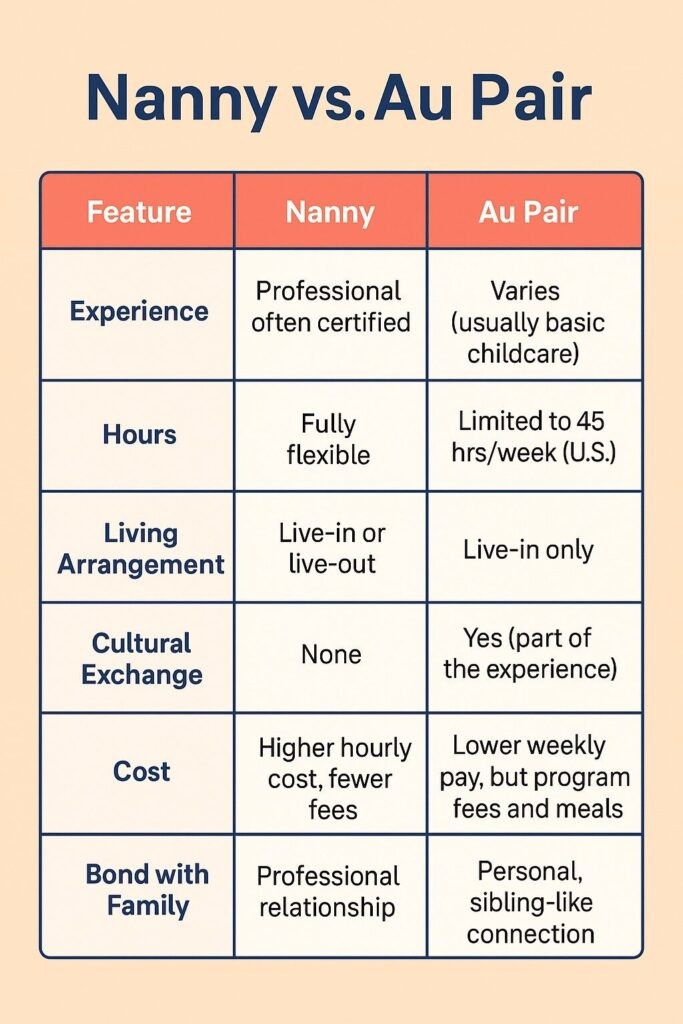
A travel nanny is a professional childcare specialist who accompanies families on domestic or international trips. These skilled professionals typically possess formal qualifications in early childhood education or extensive professional nanny experience. Travel nannies focus exclusively on children’s safety, development, and daily routines throughout the journey.
Key characteristics include:
- Specialized training in child development
- Experience managing children in diverse settings
- Flexibility to accommodate changing travel itineraries
- Focus on educational activities and age-appropriate engagement
What Is an Au Pair?
An au pair is a cultural exchange participant who provides live-in childcare in exchange for cultural immersion. This arrangement involves a formal program governed by U.S. Department of State regulations, focusing on mutual cultural education.
Distinct au pair features include:
- Young adults (typically 18-26) from foreign countries
- Limited childcare experience compared to professional nannies
- Agreement to perform light household duties related to children
- Maximum 45-hour work week as mandated by program rules
Key Differences Between a Travel Nanny and Au Pair
Employment Structure and Benefits
Travel nannies operate as professional service providers with formal contracts. They receive competitive salaries, overtime pay, and travel-related benefits. These childcare experts provide continuity on extended trips and adapt to complex schedules. Many families retain the same travel nanny for multiple trips.
Conversely, au pair arrangements typically follow a cultural exchange model. The U.S. program caps weekly hours and specifies stipend amounts. Host families must provide private rooms, meals, and educational allowances alongside their weekly payments.
Roles and Responsibilities
Travel nannies specialize in child-focused services during trips. Their core responsibilities include:
- Creating educational activities during transit
- Managing sleep schedules across time zones
- Packing and organizing child-specific travel gear
- Implementing safety protocols in new environments
Au pairs blend childcare with cultural exchange. While traveling with host families, their duties may expand to include:
- Language practice with children
- Sharing cultural traditions through activities
- Performing light child-related domestic tasks
Costs and Logistics
The financial investment varies significantly between these childcare options. Travel nannies command professional salaries ($25-$45/hour plus expenses), while au pairs receive weekly stipends ($195.75 minimum in 2026) plus room and board. However, host families must also cover agency fees, educational credits, and program-related costs for au pairs.
Travel logistics differ substantially:
- Documentation: International nannies often require work visas
- Accommodations: Travel nannies expect private hotel rooms
- Insurance: Professional nannies typically carry their own liability coverage
Cultural Exchange Aspects
Au Pair Cultural Exchange Programs
The au pair experience centers on mutual cultural education. Programs emphasize language acquisition and cultural immersion. Host families typically integrate au pairs into family meals, local activities, and holiday traditions during their stay abroad.
Notable program requirements include:
- Mandatory educational credits for au pairs
- Cultural orientation sessions
- Regular check-ins with sponsoring agencies
Travel Nanny Cultural Flexibility
Professional travel nannies adapt to various cultural settings without formal exchange requirements. Experienced caregivers often develop multicultural childcare strategies and may speak multiple languages. Some families specifically hire bilingual nannies who can reinforce language learning during travel.
Key advantages include:
- Culture-specific childcare expertise (e.g., regional safety norms)
- Customized educational approaches for destinations
- Flexibility to navigate cultural transitions smoothly
Having explored the fundamental differences between travel nannies and au pairs, families can better appreciate these distinct childcare solutions. In our next section, we’ll compare costs, flexibility, and cultural considerations to help you determine the best fit for your traveling family’s needs.
Comparing Costs and Logistics for Traveling Families
Choosing between a travel nanny and an au pair requires thorough cost analysis. Furthermore, logistical considerations significantly impact which childcare solution works best for mobile families.
Daily/Weekly Rates and Salary Structures
Travel nanny costs typically reflect professional expertise. Specifically, specialized caregivers command $1200-$2800 weekly depending on qualifications and location. Moreover, most charge higher rates than au pairs due to specific travel training.
Travel Nanny Fee Breakdown
Professional travel nannies generally request weekly payment through formal contracts. In addition to base salaries between $25-$50 hourly, families cover all travel-related costs. These include flights, accommodations, meals, and insurance premiums.
Au Pair Stipend Expectations
Au pairs operate under cultural exchange guidelines requiring $195.75 weekly minimum stipends in 2026. In contrast to travel nannies, their compensation excludes travel expenses in most arrangements. However, program fees add $8000-$10000 annually covering agency support.
Transitioning between countries affects both pricing models. For example, destinations with high living costs typically increase caregiver rates accordingly. Additionally, exchange rates influence au pair stipend values during international trips.
Travel Accommodation Requirements
Housing logistics differ greatly between travel nanny vs au pair arrangements. Specifically, au pairs need private bedrooms within family accommodations. Conversely, travel nannies expect separate lodging unless overnight duties are specified.
Families must coordinate sleeping arrangements before international trips. This avoids legal complications in destination countries. Furthermore, many visas require proof of adequate housing for accompanying childcare providers.
Visa and Legal Considerations
Legal documentation varies substantially between these childcare options. France visa requirements, for instance, distinguish between professional employees and cultural exchange participants.
Travel Nanny Work Authorization
Professional caregivers require work visas for international employment. This process involves sponsoring caregivers as domestic employees. Moreover, some countries limit foreign domestic worker visas to 6-12 month durations.
Au Pair Program Regulations
Au pairs utilize cultural exchange visas like the U.S. J-1 program. Families must partner with designated sponsor agencies complying with national regulations. However, these visas restrict au pairs from extended stays beyond program terms.
Medical insurance constitutes another legal requirement. Travel nannies may need international health coverage separate from family policies. Meanwhile, au pair programs include mandated insurance packages in their fees.
Contract Duration and Flexibility
Employment terms differ considerably in travel nanny vs au pair arrangements. Professional caregivers frequently accept short-term contracts aligned with specific trips. Alternatively, au pairs commit to 6-12 month cultural exchange periods.
Last-minute trip adjustments prove easier with travel nannies. Their professional contracts often include trip cancellation clauses with flat fees. In contrast, au pair agreements require mediation through sponsoring agencies for significant changes.
Additional Cost Considerations
Hidden expenses impact household budgets differently. Travel nannies typically request separate per diems for meals and incidentals. Meanwhile, au pairs require education stipends ($500 annually) for mandated coursework.
Transportation logistics create further financial distinctions. Travel nannies expect business-class seats on long flights with families. Conversely, au pairs travel in economy class unless families choose to upgrade voluntarily.
Families should evaluate total costs beyond apparent fees. This ensures accurate budgeting for childcare during international adventures. Moreover, currency conversion differences affect amounts in both childcare scenarios.
Understanding these financial and logistical aspects helps families navigate the travel nanny vs au pair decision. Next, we’ll examine how personality dynamics and childcare styles impact your selection process in 'Personality Match and Cultural Considerations'.
Making the Right Choice for Your Family's Needs
Ultimately, selecting between a travel nanny vs au pair comes down to your family's unique circumstances. Let's break down the critical factors that should guide this important decision.
Key Considerations: Travel Nanny vs Au Pair Flexibility
First, examine how each option aligns with your travel style and childcare requirements:
Schedule Demands
- Travel nannies typically offer dedicated availability including evenings/weekends
- Au pairs follow regulated weekly hour limits (usually 45 hours max)
- Nannies can provide overnight care during parents' excursions
Location Adaptability
- Travel nannies specialize in adjusting to new environments quickly
- Many au pairs need orientation time in each destination
- Nannies often handle logistics like child-safe accommodations
Cost Comparison: Travel Nanny vs Au Pair Expenses
Understanding the full financial picture is crucial for informed decisions:
Upfront Costs
- Au pairs: Agency fees ($8,000-$10,000 average in 2026)
- Travel nannies: Placement fees (typically 10-15% of annual salary)
- Visa processing fees for both options
Ongoing Expenses
- Au pairs: Weekly stipend ($200-$300) plus room/board
- Travel nannies: Higher hourly rates ($25-$45) plus travel expenses
- Insurance costs vary significantly between options
According to Cultural Care Au Pair, the total first-year au pair investment averages 30% less than professional nanny services.
Skill Sets and Qualifications Compared
The caregiver's capabilities should match your children's needs:
Educational Background
- 85% of travel nannies hold childcare certifications
- 60% have Early Childhood Education degrees
- Au pairs complete basic childcare safety training
Specialized Experience
- Travel nannies often have:
- Multi-language fluency
- Special needs training
- Travel logistics expertise
Conversely, au pairs provide authentic cultural immersion that enhances language skills.
Your Step-by-Step Decision Guide
1. Assess Your Travel Patterns
International nomads vs occasional vacationers will have different needs. Frequent travelers often prefer a dedicated travel nanny's consistency.
2. Evaluate Child Requirements
Children with special needs or intensive schedules likely require professional nanny support. Those seeking cultural exchange thrive with au pairs.
3. Calculate True Budget
Compare all costs including:
- Accommodations
- Transportation
- Incidental expenses
4. Test Compatibility
Conduct video interviews with candidates. Trial periods prevent mismatches.
Pro Tips for Hiring Success
Sourcing Qualified Candidates
- Use specialized agencies for travel nannies
- Interview at least 3 au pairs via approved programs
- Check industry-specific references
Creating Effective Agreements
Essential contract elements include:
- Clear role expectations
- Precise compensation breakdown
- Termination clauses
- Confidentiality terms
Final Verdict: Travel Nanny vs Au Pair
To summarize, travel nannies deliver professional childcare expertise across locations, while au pairs offer affordable cultural exchange. Young children and complex schedules typically fare better with nannies. School-age children often gain tremendous value from au pair relationships.
Ultimately, the travel nanny vs au pair decision hinges on your family's specific priorities. Start planning early, evaluate your true needs versus wants, and trust your instincts about caregiver connections. Book consultation calls with both types of providers to compare options directly. The right choice creates magical travel experiences where children thrive and parents relax.