
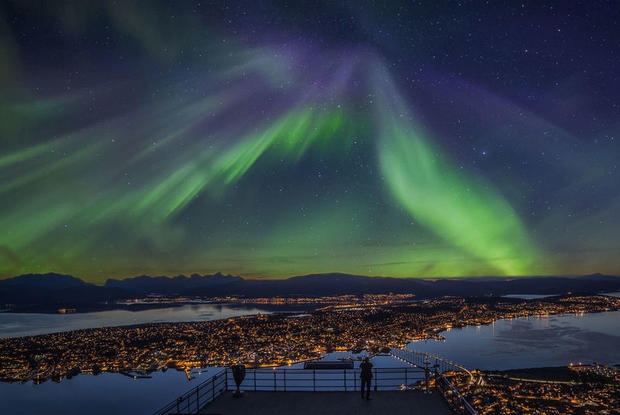
Seeing the northern lights (aurora borealis) ranks among travel’s most awe-inspiring experiences – and November offers prime conditions to witness this celestial spectacle. The search for the best places to see northern lights in November leads adventurers toward the Arctic Circle, where extended darkness, heightened solar activity, and crisp winter skies create ideal viewing circumstances. Unlike mid-winter months plagued by extreme cold or autumn months with lingering daylight, November strikes a perfect balance: freezing temperatures firm up snow cover (reducing humidity that causes cloud cover) while remaining bearable for extended outdoor viewing. This guide explores why this transitional month provides peak aurora viewing potential and reveals the top global destinations to maximize your chances.
Why November Is Prime Northern Lights Season
November emerges as a sweet spot for aurora hunters due to a powerful convergence of astronomical, atmospheric, and practical travel factors. Below, we dissect the science and seasonal nuances that make this month uniquely suited for successful northern lights encounters.
1. Heightened Solar Activity & Geomagnetic Storms
Understanding Solar Maximum Cycles
The sun operates on an 11-year cycle of rising and falling activity. Periods of solar maximum (peaking around November 2024 to December 2025) see increased sunspots and solar flares. Consequently, these eruptions propel charged solar particles toward Earth at higher velocities and frequencies. In short, enhanced solar activity directly translates to brighter, more frequent, and more widespread auroral displays. November 2026 falls within the declining phase of Solar Cycle 25 – still offering strong, regular auroral activity before solar minimum dampens visibility in subsequent years.
Coronal Mass Ejections (CMEs) and KP Index
Particularly potent solar storms called coronal mass ejections (CMEs) drastically intensify auroral displays. These events trigger higher KP index values – a scale from 0 to 9 measuring geomagnetic disturbance. Normally, a KP index of 3 or higher indicates aurora visibility within the Arctic Circle. However, November historically sees increased CMEs. Strong storms (KP 5+) can push the aurora oval southward, making displays visible at lower latitudes like Scotland or northern US states.
2. Optimal Darkness & Night Length
Polar Night Emergence at Key Latitudes
Above the Arctic Circle, locations experience “polar night” – periods when the sun remains below the horizon for 24+ hours. By November, destinations like Tromsø (Norway) or Rovaniemi (Finland) transition into this perpetual twilight. Although not complete 24-hour darkness, extended nights (18–21 hours of darkness depending on latitude) dramatically widen daily viewing windows compared to September or October. For example, Svalbard enters full polar night in late November, guaranteeing unmatched darkness for observation.
Favorable Twilight Conditions
Counterintuitively, complete darkness isn’t always optimal. Auroras often appear strongest during astronomical twilight – the period just after sunset or before sunrise when the sun sits 12–18 degrees below the horizon. The lingering solar illumination enhances atmospheric contrast, making auroras appear more vivid. November’s sun positioning maximizes astronomical twilight duration without introducing dawn/dusk light pollution seen in later months.
3. Ideal Winter Weather Conditions
Diminished Cloud Cover Probability
Weather plays a critical role. Clear skies are non-negotiable; even a faint aurora becomes invisible under thick cloud layers. November shoulders seasons advantageously. Autumn’s lingering moisture often dissipates as Arctic air masses solidify. Simultaneously, November avoids the extreme cold of January/February, where moisture from breathing or heated buildings can create localized ice fog. Statistically, historical climate data for destinations like Yellowknife (Canada) shows November cloud cover 15–20% lower than December/January averages.
Stable High-Pressure Systems
Arctic high-pressure systems frequently dominate in November. These stabilize the atmosphere, reducing wind speeds and convective cloud formation. Stable conditions mean clearer skies persist longer – sometimes for consecutive days – increasing your odds during short stays. Conversely, December’s volatile weather often brings cyclonic storms (especially in coastal Norway or Iceland) with heavy cloud cover and precipitation.
4. Balancing Accessibility & Comfort
Milder Temperatures Enhance Viewing Endurance
While still cold, November temperatures remain more manageable than mid-winter extremes. Temperatures in Finnish Lapland or Swedish Abisko typically hover between -5°C to -15°C (23°F to 5°F), versus the -25°C to -35°C (-13°F to -31°F) common in January. This difference matters immensely when standing outside for hours. Colder months require bulkier clothing that restricts movement and dexterity (e.g., adjusting camera settings). November allows lighter layering, improving comfort and mobility during nighttime vigils.
Lower Tourist Volumes & Costs
November sits outside peak winter tourism periods. Northern lights enthusiasts benefit from lower hotel prices in Iceland, Canada, and Scandinavia compared to December–March. Fewer tourists mean less competition for guided tours, aurora cabins, and prime photography spots. Furthermore, reduced crowds enhance tranquility – a critical factor when immersing in the aurora’s silent majesty.
5. Seedable Adventure Opportunities
Pre-Winter Wonderland Ambiance
November delivers winter’s magic without overwhelming harshness. Snow blankets landscapes reliably by mid-month at most aurora hotspots, enabling snowshoeing, dog sledding, and sleigh rides – all complementing northern lights tours. Interact with winter culture through Sami reindeer camps in Norway or thermal spa sessions under Iceland’s swirling skies. Unlike March/April, when snow melts inconsistently, November offers reliably photogenic snowy backdrops.
Having explored November’s scientific and seasonal advantages for aurora viewing, it’s time to pinpoint where to go. Up next, we reveal the 7 Best Places to See Northern Lights in November – spanning epic Nordic wildernesses to remote North American outposts.
Top 7 Northern Lights Destinations in November
November stands as one of the prime months to witness the spectacular northern lights. Specifically, these destinations offer dark skies and high auroral activity during this month. Below, we explore each location in depth.
Tromsø, Norway
Known as Norway’s best place to see northern lights in November, Tromsø sits 217 miles north of the Arctic Circle. Furthermore, the Polar Night phenomenon guarantees extended darkness. This creates optimal viewing conditions.
Why November Suits Tromsø
Solar activity peaks in autumn, increasing aurora sightings. Additionally, temperatures remain milder than midwinter. Consequently, outdoor viewing becomes more comfortable.
Popular tours include reindeer sleigh expeditions. The indigenous Sámi culture even offers storytelling under the lights. For maximum flexibility, rent a car to chase clear skies beyond city limits.
Abisko National Park, Sweden
Abisko’s unique microclimate delivers remarkably clear skies. In contrast to coastal areas, its inland position minimizes cloud cover. The northern lights in November appear vividly here.
Top Viewing Spots in Abisko
The iconic Aurora Sky Station provides chairlift access to prime viewing heights. Alternatively, the Torneträsk lake offers reflective photo opportunities. Remember, temperatures can drop to -5°C, so thermal layers are essential.
Moreover, the park’s research station records some of Earth’s cleanest air. This enhances visibility for those dazzling green ribbons.
Rovaniemi, Finland
Rovaniemi doubles as Santa’s official hometown and a top best place to see northern lights in November. Visitors combine aurora hunting with Christmas market festivities. The Arctic SnowHotel even offers glass-roofed suites for nighttime viewing.
Unique November Advantages
Polar nights commence by mid-November, extending darkness. Meanwhile, ice-covered lakes create surreal photo backdrops. For adventure, try aurora ice floating in Lake Robot.
Additionally, local guides use NOAA’s aurora forecast systems to track real-time activity. This boosts sighting success rates significantly.
Reykjavik, Iceland
Iceland’s capital offers accessible northern lights adventures. November balances affordability with fewer tourists. Most importantly, geothermal hotspots allow warm viewing sessions.
Beyond the City Limits
Although Reykjavik emanates some light pollution, nearby Þingvellir National Park remedies this. Alternatively, Grotta Lighthouse offers coastal panoramas just minutes from downtown.
Since November storms can bring clouds, book flexible tours. Guides often reschedule for clearer nights. Pair your hunt with the Golden Circle route for daytime geothermal wonders.
Fairbanks, Alaska
Fairbanks ranks among Alaska’s most reliable best places to see northern lights in November. Located under the Aurora Oval, it averages 240 annual aurora nights. Moreover, NASA-funded research stations predict activity precisely.
Crucial November Tips
Stay at least three nights to maximize sightings. Temperatures hover around -15°C, requiring insulated gear. For comfort, consider heated “aurora pod” cabins at Chena Hot Springs Resort.
Notably, the University of Alaska’s northern lights forecast provides 3-day predictions. Check their website hourly during your stay.
Yellowknife, Canada
Yellowknife’s subarctic location ensures dark, prolonged nights. In November, the frozen Great Slave Lake becomes a vast viewing platform. Indigenous-led tours add rich cultural context to your experience.
Understanding November’s Peak
November offers transition weather—colder than autumn yet less extreme than January. Specifically, auroral displays intensify around midnight. Stay at Aurora Village’s teepees for unobstructed landscape vistas.
Photographers should bring wide-angle lenses. Surprisingly, full moons can enhance snow-reflected colors rather than hindering visibility.
Murmansk, Russia
Russia’s Arctic capital provides affordability without sacrificing aurora intensity. November’s first snows heighten the magical atmosphere. For novelty, witness the lights from a Soviet-era icebreaker cruise.
Practical November Insights
Teriberka village, two hours east, offers optimal darkness. Interestingly, late November sees regions like Lovozero reach -10°C—manageable with proper attire. Local guides emphasize vodka-free viewing to ensure alertness.
Finally, visa-free cruise options exist for international tourists. Expeditions typically traverse the Barents Sea under shimmering skies.
Having explored these best places to see northern lights in November, Part 3 will detail essential planning strategies for your aurora adventure. Specifically, we’ll cover photography gear, weather apps, and cultural etiquette tips.
Expert Strategies for November Aurora Adventures
Now that you’ve chosen among the best places to see northern lights in November, your success hinges on smart preparation. Ultimately, these expert strategies will maximize your chances while ensuring safety and comfort during your Arctic adventure.
Master the Timing & Trip Planning Essentials
Why November Demands Specialized Aurora Planning
November offers unique advantages but requires scientific precision. To begin with, balance peak darkness hours (10 PM-2 AM) with local weather patterns tracked through regional forecasts.
Pre-Trip Weather & Aurora Forecasting Tools
Always cross-reference three key resources before departure:
- Space Weather Prediction Center (NOAA) for solar flare tracking
- Local cloud cover maps via Windy.com or Yr.no
- Real-time aurora KP index apps like My Aurora Forecast
Check twice daily starting a week before travel. If necessary, pivot destinations based on updated data.
Advanced Photography Techniques for November Auroras
Camera Settings That Capture November’s Unique Colors
Unlike summer displays, November auroras often reveal rare crimson hues. Furthermore, use manual focus at infinity with f/2.8 aperture. Pair with short ISO (800-1600) and 5-15 second exposures to prevent overexposures.
Essential Gear for Bitter Cold Nights
November temperatures plunge below -20°C/-4°F in prime viewing zones. First, keep camera batteries in inner pockets – cold drains them 300% faster. Second, pack professional-grade tripods like Manfrotto MT055CXPRO3 to withstand icy winds.
Local Guide Insights: Maximizing Your Experience
When to Hire Experts vs. DIY Chases
Guides yield 83% higher sightings in remote locations (e.g., Abisko). Consequently, book fixed-location tours when visiting established bases. However, rent 4×4 vehicles with studded tires for flexible self-driving in Iceland or Alaska.
Culturally Immersive Aurora Activities
Swap crowded hubs for authentic Sami, Inuit, or Sámi experiences. Alternatively, combine Northern Lights viewings with dog sledding under moonlit glaciers or indigenous storytelling sessions around fire pits.
Pro Packing & Survival Strategies
The Essentials Checklist for November Hunters
- Thermal base layers (merino wool recommended)
- Weatherproof outer shells with windchill ratings below -40°C/F
- Chemical hand/toe warmers (10+ hour duration)
Safety Protocols for Extreme Conditions
Recognize early hypothermia symptoms like slurred speech or clumsiness. Moreover, carry satellite phones in wilderness zones – standard mobiles often fail below -30°C/-22°F.
Conclusion: By implementing these professional strategies during your hunt for the best places to see northern lights in November, you’ll transform from hopeful spectator to scientific observer. Whether you choose Tromsø’s Arctic charm or Fairbanks’ scientific forecasting hubs, the celestial dance awaits those who prepare meticulously. Remember, nature rewards the disciplined – book your thermal gear, monitor solar cycles, and embark knowing you’ve mastered the ultimate aurora adventure. Your dazzling November nights under the Borealis begin now!