
Essential Thailand Work and Travel Visa Requirements for NY Residents
Dreaming of trading New York skyscrapers for Thailand’s tropical beaches while earning an income? As a NY resident planning your Southeast Asian adventure, understanding the Thailand work and travel visa process is crucial. Thailand offers unique opportunities for professionals and digital nomads seeking cultural immersion. However, navigating visa regulations requires careful preparation.
This guide provides NY-specific insights into legal requirements for working while exploring Thailand. We’ll break down every step – from selecting the right visa category to post-arrival registration. Proper planning prevents stressful surprises at immigration checkpoints.
By the end of this section, you’ll know exactly which documents to prepare before visiting the Royal Thai Embassy in Washington D.C. Let’s begin with the fundamental requirements for legally combining work and travel in the Land of Smiles.
1. Understanding Thailand Visa Categories for Working Travelers
Selecting the appropriate visa is your first critical decision. Thailand’s immigration system offers multiple pathways for NY residents seeking both employment and travel flexibility.
1.1 Non-Immigrant B Visa (Single/Multiple Entry)
The Non-Immigrant B visa remains the gold standard for formal employment. NY applicants must secure a job offer from a Thai-registered company first. Importantly, this visa requires employer sponsorship and work permit coordination. Multiple-entry options allow border runs rather than visa renewals during your stay.
Key features include:
- Up to 90-day initial stay (extendable to 1 year)
- Legal authorization for full-time employment
- Mandatory company documentation from employer
1.2 SMART Visa for Specialized Professionals
Thailand’s SMART Visa program attracts high-skilled NY professionals in tech, science, and executive roles. This 4-year visa eliminates work permit requirements. Crucially, candidates must earn at least $2,000 monthly and work in targeted industries. Digital nomads often prefer this option despite stricter qualifications.
1.3 Education Visa (ED) with Work Allowances
NY residents enrolled in Thai language courses or universities may qualify for limited work rights through an ED visa. Recent reforms permit 20-hour weekly employment for students. Therefore, this alternative appeals to those combining studies with part-time work. Always confirm current work restrictions with your educational institution.
Transitioning between visa types within Thailand is complex. Consult a Thai immigration lawyer before converting tourist visas to work status.
2. General Requirements for New York Applicants
NY residents face identical baseline requirements as other U.S. applicants, but processing times may vary due to document authentication procedures. Start gathering these essentials 3 months pre-departure.
2.1 Valid Passport Specifications
Your passport must satisfy Thailand’s strict validity rules:
- Minimum 6 months remaining validity beyond entry date
- At least two completely blank visa pages
- No signs of damage or tampering
New Yorkers with dual citizenship should consistently use the same passport for all application steps. Importantly, passport cards aren’t accepted for Thai visa applications.
2.2 Proof of Financial Means
Thai authorities require NY applicants to demonstrate sufficient funds. Requirements vary by visa type:
- Non-Immigrant B: $700 equivalent in Thai baht
- SMART Visa: Proof of $2,000+ monthly income
- Tourist Visa conversion: $1,500 bank statement
Bank statements must be original documents with official bank seals. Digital nomads often use multiple accounts to meet thresholds.
2.3 Photograph Requirements
Submit two identical 4x6cm photos meeting these specs:
- Recent (taken within 6 months)
- White background only
- Full-face view with neutral expression
- No glasses or headwear (religious exemptions apply)
Many NYC photo shops know Thai visa specifications – mention your purpose when ordering.
3. Securing Your Thai Work Permit
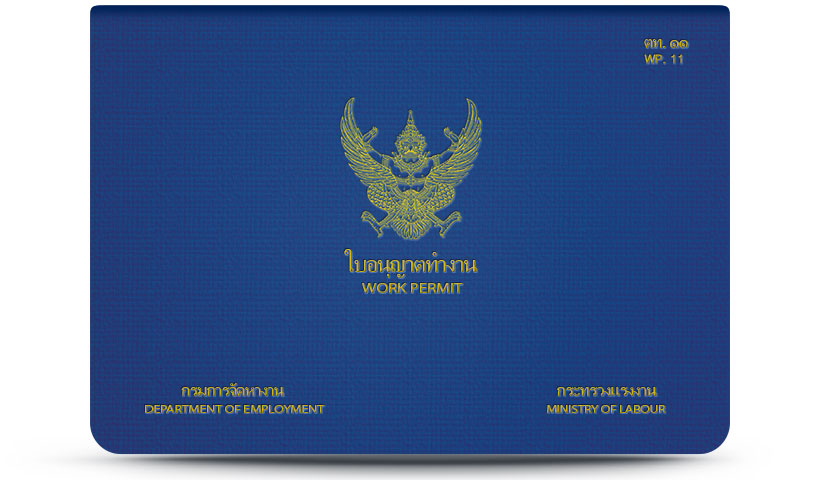
A critical distinction exists between obtaining a Thailand work and travel visa and securing actual work authorization. Many NY applicants misunderstand this two-step process.
3.1 Work Permit Application Process
Your Thai employer initiates work permit applications at the Ministry of Labor. NY residents typically complete these steps:
- Receive employment contract countersigned by employer
- Submit WP3 form via employer to Thai Labor Department
- Apply for Non-B visa once WP approval letter arrives
- Complete WP issuance at Labor Office within 90 days of arrival
Processing averages 7-10 business days if documents are perfect. Delays commonly occur due to translation errors.
3.2 Document Legalization for NY Residents
New York requires extra authentication steps often confusing applicants:
- Step 1: Notarize documents by NY notary public
- Step 2: Authenticate at NY Secretary of State office
- Step 3: Legalize at Thai Embassy/Consulate
Essential documents needing legalization include:
- University degrees
- Professional licenses
- Marriage certificates (if spouse accompanies)
- Criminal background checks
The entire authentication process takes 3-6 weeks. Start early to meet visa timelines.
3.3 Medical Certificate Requirements
All work permit applicants need certified health checks. Thai clinics can provide these upon arrival, but NY residents save time by completing them locally. Required tests include:
- Syphilis screening
- Leprosy examination
- Third-stage tuberculosis check
- Drug tests (particularly for teachers)
Use clinics experienced with Thai work permit requirements. Results are valid for just 30 days.
Next: Now that we’ve covered fundamental requirements, Part 2 will explore practical application steps for obtaining your Thailand work and travel visa from New York.
Step-by-Step Visa Application Process and Legal Compliance
Navigating Thailand's visa requirements demands careful preparation. Furthermore, understanding the proper sequence prevents costly delays for your work and travel plans. Let's break down each critical phase.
Understanding Thailand Work and Travel Visa Types
Thailand offers specific visas combining employment and tourism activities. Specifically, the Non-Immigrant B Visa serves traditional employment scenarios. In contrast, the Tourist Visa (TR) with work exemption covers limited remote work.
Single vs. Multiple Entry Options
Choose single-entry visas for stays under 90 days. Alternatively, multiple-entry visas suit frequent travelers between Thailand and neighboring countries. Moreover, multiple-entry permits simplify regional exploration during your working holiday.
Special Tourist Visa (STV) Considerations
This 90-day renewable visa accommodates long-stay tourists with remote work capabilities. However, STV holders cannot seek local employment or generate Thai-sourced income. Always confirm current STV regulations through the Thailand Immigration Bureau.
Essential Documentation for Visa Submission
Gather these critical materials before application. Missing documents remain the primary cause of Thailand work and travel visa rejections.
Core Application Requirements
A valid passport must have six months' validity and two blank pages. Additionally, provide two recent passport-sized photos meeting Thai specifications. You'll also need completed TM86 and TM87 application forms.
Employment Authorization Evidence
Include a notarized employment contract from your Thai employer. Specifically, this should detail position, salary, and contract duration. Furthermore, supplemental documents like business registrations strengthen employer legitimacy claims.
Financial Proof Specifications
Demonstrate 20,000 THB ($550) minimum monthly income for single applicants. Alternatively, show 400,000 THB ($11,000) in a Thai bank account. Recent bank statements must carry official bank seals and signatures.
Detailed Application Walkthrough
Follow this chronological process for efficient Thailand work and travel visa processing.
Stage 1: Preliminary Requirements
First, secure your Thai work permit approval letter. Simultaneously, schedule medical examinations at approved clinics. Notably, HIV tests remain mandatory for all work visa applicants in 2026.
Stage 2: Embassy Submission Protocol
Submit materials in-person at your designated Royal Thai Embassy or Consulate. Crucially, New York applicants must use the Royal Thai Consulate General. Processing generally takes 5-10 business days for complete applications.
Stage 3: Arrival Formalities
Present your visa stamp to immigration officers upon landing. Subsequently, complete TM6 arrival cards with local accommodation details. Finally, request the 90-day reporting calendar notification from your border agent.
Post-Arrival Legal Compliance Measures
Maintain legal status through rigorous adherence to Thai immigration rules.
90-Day Reporting Requirements
File TM47 reports quarterly with local immigration offices. Alternatively, use the online reporting portal during authorized windows. Violations incur 2,000-5,000 THB fines per incident.
Visa Extension Procedures
Initiate extensions 30 days before visa expiration at immigration offices. Moreover, extension applicants need updated bank statements and employer confirmations. Failure to extend timely results in automatic overstay penalties.
Work Scope Limitations
Never engage in unauthorized employment outside your visa classification. Specifically, tourism visa holders cannot accept formal Thai employment. Any work must align strictly with your permit' approved occupational category.
Consequences of Non-Compliance
Thai authorities enforce visa violations strictly. Overstays trigger 500 THB daily fines up to 20,000 THB maximum. Furthermore, immigration blacklisting bars offenders for 1-10 years depending on severity.
Understanding these procedures ensures smooth Thailand work and travel visa experiences. Next, we explore Essential Cultural and Workplace Adaptation Strategies for thriving in Thailand's professional environment.
Advanced Strategies for Thriving in Thailand
Ultimately, securing your Thailand work and travel visa is just the first step in your journey. To truly excel in the Land of Smiles, you need advanced strategies that go beyond basic paperwork. This section equips you with professional-level insights to maximize your experience.
Mastering Cultural Integration
Successful long-term stays require deep cultural understanding. Thailand’s business etiquette differs greatly from Western norms.
The Business Wai Protocol
Did you know there are 13 different wai greetings based on social status? Professional situations demand precise execution. Moreover, exchange business cards with both hands and study it thoroughly before putting it away.
Hierarchy Recognition
Thai companies maintain strict hierarchical structures. Always address senior colleagues with proper honorifics like “Khun.” Criticizing superiors publicly creates irreversible damage.
Networking for Career Growth
Building professional networks unlocks career opportunities beyond typical Thailand work and travel visa limitations.
Leveraging Digital Nomad Hubs
Join coworking spaces like The Hive or Hubba. Attend networking events specifically for remote workers. These communities often share job leads unavailable elsewhere.
Local Professional Organizations
Organizations like the Thai Chamber of Commerce facilitate valuable connections. Registration often requires proof of your Thailand work and travel visa status.
Financial Optimization Tactics
Smart money management multiplies your earning potential. This requires understanding Thailand’s financial ecosystem.
Dual-Currency Banking Solutions
Open accounts supporting both THB and USD through Bangkok Bank or Kasikorn. Utilize multi-currency wallets to avoid transfer fees.
Legal Tax Reduction Methods
Thailand offers special tax incentives under its Smart Visa program. Consult with Revenue Department certified advisors.
Cost of Living Hacks
Shop where locals shop: Use Makro instead of Villa Market. Negotiate up to 20% discounts when paying annual rents upfront.
Advanced Visa Compliance Strategies
Thailand’s immigration policies constantly evolve. Remain one step ahead with these tactics.
Premium Visa Services
Multi-year Thailand work and travel visa programs now exist for qualifying professionals. Requirements include proof of ₺1.8M annual income.
Border Run Alternatives
Replace chaotic border runs with formal extensions through immigration offices. Always keep printed bank statements showing your ₺20,000 minimum balance.
Elite Digital Workspace Setup
Productivity problems disappear with proper workspace configuration.
5G Hotspot Solutions
Purchase dual-SIM phones with AIS and TrueMove plans. Combine connections for failproof video conferencing.
Time Zone Synchronization
Create overlapping office hours for US clients using segmented work blocks: 7PM-10PM and 7AM-11AM local time.
Health & Wellness Optimization
Maintaining peak performance requires specialized health strategies.
International Health Plans
Standard travel insurance won’t suffice. Invest in global plans like Cigna Global that include medical evacuation coverage.
Premium Fitness Solutions
Join high-end gyms like Fitness First Platinum. They offer business networking areas perfect for Thailand work and travel visa holders.
Conclusion: Your Thailand Success Blueprint
To conclude, thriving in Thailand demands more than just obtaining your Thailand work and travel visa. Implement these advanced cultural, financial, and professional strategies to transform your experience. Ultimately, your success depends on preparation, flexibility, and respect for local norms. Begin implementing these tactics today to unlock unparalleled opportunities. Don’t simply work in Thailand – dominate your field while enjoying paradise. Start your transformation now by evaluating which strategy you’ll activate first!