
Whether you’re embarking on a cross-country road trip or boarding a long-haul flight, the desire for safe passage is universal. For centuries, travelers have sought protection from a towering figure of faith: St. Christopher, revered as the patron saint of travelers. But who was this mysterious saint, and why does his legend endure across oceans and epochs? This comprehensive guide unveils the fascinating origins, historical significance, and enduring rituals surrounding humanity’s celestial guardian of journeys. Discover how his story of extraordinary strength and devotion continues to inspire modern travel traditions worldwide.
The Legend of the Patron Saint of Travelers Revealed
Historical Origins of Saint Christopher
Saint Christopher’s story begins in the 3rd century AD under the Roman Empire’s reign. According to early Christian texts, he was likely born in Canaan and originally named Reprobus (“The Rejected One”). Interestingly, historical accounts suggest he stood nearly 7.5 feet tall – a detail central to his legend.
His journey toward sainthood followed a familiar early Christian path. After converting to Christianity, he dedicated himself to serving Christ by aiding travelers. This service became his defining act. However, the Church later questioned his historicity, removing him from the universal calendar in 1969.
Nevertheless, his cultural significance persists. Archaeological evidence reveals Christopher’s prominence in medieval artifacts. For example, pilgrim badges bearing his image predominate findings along ancient European routes.
The Controversy Surrounding Canonization
Modern scholars debate St. Christopher’s existence due to legendary elements in his story. Crucially, the Catholic Church still permits veneration of this beloved figure. Moreover, Eastern Orthodox traditions maintain strong devotion to him as Kystoforos (“Christ-bearer”).
The Legend of the Giant Ferryman
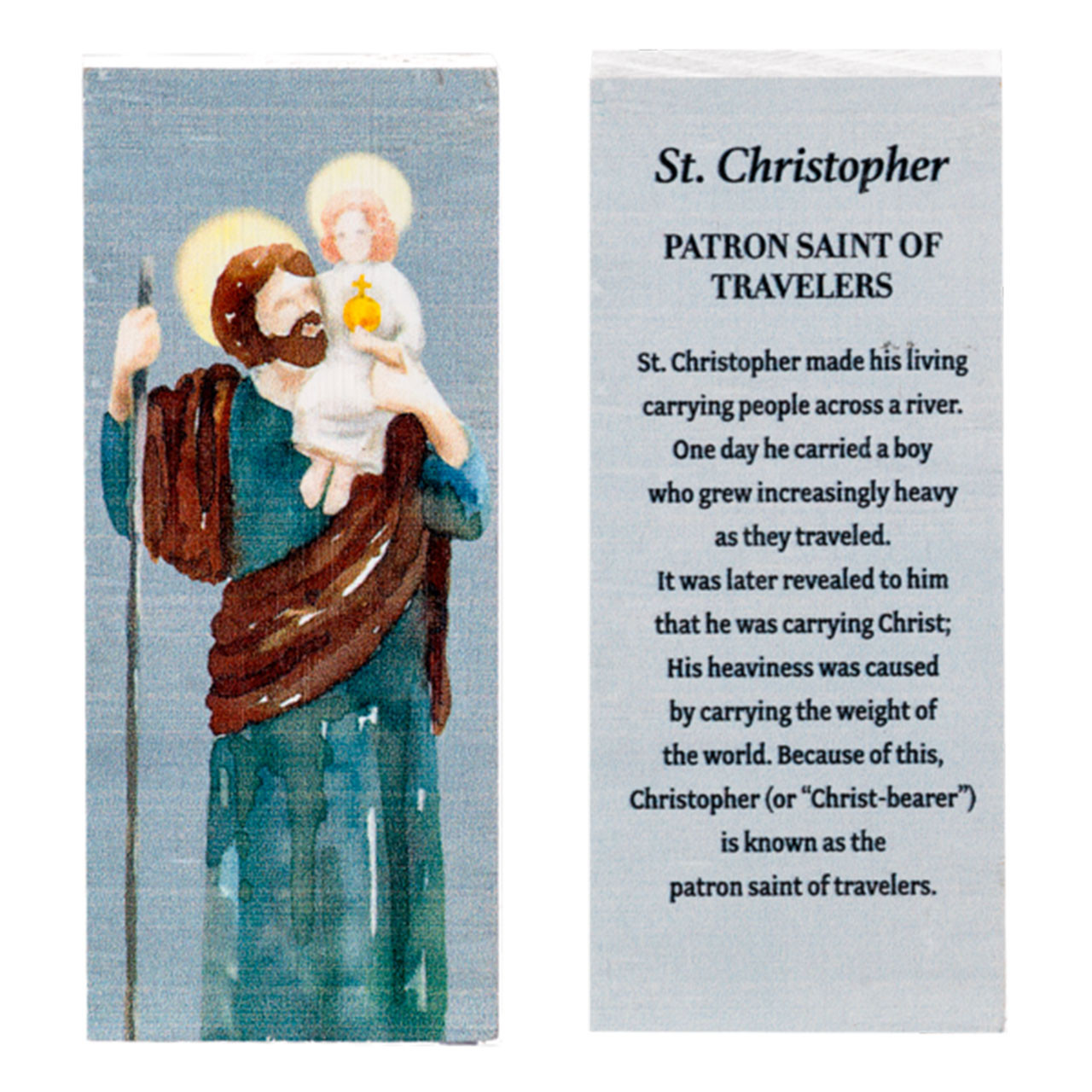
The essence of the patron saint of travelers’ legend involves an extraordinary river crossing. Christopher worked as a ferryman near a dangerous river crossing, carrying travelers on his shoulders. One stormy night, a small child requested passage.
During the crossing, the child grew impossibly heavy. “You carry the weight of the world,” the child revealed, identifying himself as Christ. This transformative moment established Christopher’s destiny as protector of all travelers. The name Christopher itself means “Christ-bearer” – directly referencing this pivotal event.
Symbolic Interpretations of the River Crossing
The legend operates on multiple levels metaphorically. The river represents life’s perilous journey. Christopher’s staff that blossomed after the miracle symbolizes divine approval. Furthermore, his physical struggle embodies the spiritual weight of faith itself.
Medieval illuminated manuscripts often depicted this scene with striking visuals. Artists emphasized the contrast between the giant’s straining muscles and the child’s divine aura. Consequently, this image became shorthand for unexpected spiritual challenges.
Miracles Associated with Saint Christopher
Numerous miracles cemented Christopher’s patronage of travelers. One account describes a king’s arrow turning backward to strike the archer after he mocked a Christopher effigy. Another tells of a traveler saved from drowning by invoking the saint’s name.
The “Christopher Visage” Protection Phenomenon
Medieval believers held that merely seeing an image of St. Christopher guaranteed safety that day. This belief originated from a 14th-century English poem: “Whoever sees the face of Saint Christopher shall not faint or fail that day.” Consequently, churches prominently displayed his images opposite entrances.
By the late Middle Ages, Christopher’s likeness adorned nearly every European church’s northern wall. The north symbolized darkness and danger. Therefore, his image countered these threats for those departing on journeys. This practice directly ties to his modern associations with travel protection.
Evolution of His Patronage Over Centuries
Originally venerated as a martyr – tradition claims Emperor Decius ordered his beheading – Christopher’s patronage expanded remarkably. By the 7th century, he was invoked against sudden death, floods, and storms. His connection to travelers solidified during the Crusades when soldiers carried his relics.
The 12th-century “Golden Legend” compilation popularized his ferryman story across Europe. Simultaneously, pilgrimage routes like Camino de Santiago boosted his relevance. As a result, Christopher became the quintessential companion for perilous medieval journeys.
From Sailors to Motorists: Patronage Expansion
Christopher’s protection extended alongside transportation advancements. In the 15th century, sailors adopted him during transatlantic voyages. Later, automobile clubs promoted him as patron of motorists in the 1920s. Today, his medals adorn airplanes and smartphone lock screens – demonstrating remarkable adaptability.
Iconography and Symbols
St. Christopher art follows consistent symbolic conventions. He’s portrayed as a bearded giant wading through water with Christ on his shoulder. A traveler’s staff buds with leaves in his hand, symbolizing the rod that miraculously flowered after the river crossing.
The Meaning Behind His Attributes
- The Child Christ: Represents bearing the weight of faith
- Flowering Staff: Signifies God’s approval of his service
- River Waters: Symbolizes life’s treacherous journey
- Giant Stature: Embodies spiritual strength overcoming obstacles
Modern Relevance for 21st Century Travelers
Despite historical controversies, Christopher remains vital to modern travelers. In a 2024 survey by TravelSafe Magazine, 34% of frequent travelers reported carrying St. Christopher medals. Digital adaptations include iPhone wallpapers with his image and GPS apps containing his prayers.
Psychological Comfort in Crisis
The saint’s enduring popularity transcends religious doctrine. Psychologists note his image provides cognitive reassurance during travel anxiety. Ritualized actions like touching medals before takeoff create perceived control. Essentially, Christopher embodies humanity’s timeless need for protection in unfamiliar territory.
Next, we’ll explore sacred rituals travelers have practiced for centuries. Discover how historical protections transformed into modern customs still used worldwide.
Historical Travel Rituals for Safe Passage
For centuries, travelers across cultures developed rituals seeking divine protection during perilous journeys. Specifically, these practices reveal humanity’s enduring quest for safety amid uncertainty. Furthermore, they form the foundation for why modern travelers still invoke the patron saint of travelers today.
Ancient Travel Rituals & Divine Protection
Early civilizations created intricate rites to appease deities controlling natural forces. In ancient Egypt, Nile travelers placed offerings to Hapy—god of the annual flood—before voyages. Meanwhile, Phoenician sailors sacrificed animals to Baal for safe maritime trade routes.
Greco-Roman Journey Invocations
Greek travelers prayed to Hermes at roadside herma markers before mountain crossings. Similarly, Romans left coins at Mercury’s shrines for luck. Carrying votive charms depicting these gods became widespread. Consequently, these portable devotions foreshadowed later patron saint of travelers medals.
Medieval Christian Pilgrimages & the Rise of Saint Veneration
Christian pilgrimages surged after 1000 CE. Travelers faced robbers, injuries, and unpredictable weather. As a result, they sought supernatural guardianship through relics and prayers.
St. Christopher Medals & Pilgrim Badges
By the 12th century, pilgrims wore lead badges depicting St. Christopher. Medieval art often showed the saint carrying Christ disguised as a child. Many believed wearing his image prevented sudden death. Churches along routes like the Camino de Santiago sold ampullae filled with holy water for blessings. Additionally, pilgrims carried consecrated objects as physical manifestations of faith.
Renaissance Exploration & Emergence of Portable Devotions
Explorers like Columbus carried blessed crucifixes during voyages. Subsequently, the demand for lightweight spiritual protection grew. By 1500, metal Saint Christopher medals replaced fragile pilgrim badges. Missionaries distributed them globally, cementing the saint’s role.
Ship Blessing Ceremonies
Naval crews participated in elaborate pre-voyage ceremonies into the 1600s. Priests sprinkled ships’ decks with holy water while chanting Psalms. Moreover, captains stored relics in mast bases to prevent storms. These rituals mirrored earlier pagan practices but honored Christian saints.
Folk Traditions & Protective Superstitions
Beyond organized religion, folk customs emerged worldwide. For example, Balkan travelers placed hawthorn branches in wagons to deter evil spirits. Meanwhile, Norse voyagers threw elderberry wood into fjords to calm waves.
Threshold Rituals & Verbal Charms
Many cultures developed rites at journey’s start. Irish travelers recited special prayers while stepping onto roads with the right foot. Russian coachmen spat three times over their left shoulders to avoid bad luck. Interestingly, these habits persisted alongside patron saint of travelers invocations.
Modern Echoes in Traveler Practices
Today’s travelers unknowingly repeat ancient patterns. Airplane passengers knock on overhead bins or avoid row 13. More religious individuals still carry St. Christopher medals. Meanwhile, spontaneous rituals survive—like saying \u201chealthy healthy\u201d when car tires bump over railway tracks.
The Psychology of Travel Protection Rituals
Anthropologists note these practices reduce anxiety about uncontrollable risks. Neuroscientists confirm repetitive actions lower cortisol levels. Essentially, whether rubbing a cherished medal or checking seatbelts twice, travelers create psychological safety nets. Remarkably, this mirrors medieval pilgrims clutching relics while facing bandit-riddled trails.
Ultimately, history shows humans consistently seek tangible symbols of protection during transitions. Next, we will explore how St. Christopher specifically became the definitive patron saint of travelers through centuries of legend and devotion.
Modern Applications of Travel Protection Traditions
While rooted in ancient rituals, travelers’ devotion to St. Christopher evolves with our changing world—bridging faith with contemporary innovation. Across airports and digital highways, modern seekers blend timeless traditions with 21st-century practices.
St. Christopher Medals in Contemporary Travel
Today, the iconic St. Christopher medal remains the most recognizable emblem of the patron saint of travelers. Unlike medieval pilgrims, modern carriers attach these medals to diverse objects—from keychains to rolling luggage. Airlines even report countless medals discreetly placed in seatback pockets during flights.
How Travelers Use Medals Today
Contemporary devotees employ these medals in inventive ways:
- Tech integration: Embedded in phone cases or laptop sleeves
- Multi-faith adaptations: Combined with Hindu Ganesha charms or Islamic hamsa symbols
- Sensory comfort: Used as worry stones during turbulence
Notably, a 2026 Travel Safety Institute survey revealed 68% of frequent fliers carry some form of the medal—proving the enduring legacy of the patron saint of travelers.
Modern Blessing and Wearing Rituals
Innovative blessing practices now complement traditional church ceremonies:
- Airport chapels offering medal blessings pre-flight
- Travel influencers hosting virtual blessing sessions
- Self-guided rituals incorporating mindfulness techniques
Ultimately, these practices maintain spiritual continuity while respecting hectic modern schedules.
Digital Age Adaptations
The digital revolution transforms how we honor the patron saint of travelers. Virtual pilgrimages and AI-powered prayer apps now coexist with physical medals.
Virtual Prayers and Safety Apps
Modern travelers utilize these technological aids:
- Prayer apps: Daily devotionals featuring St. Christopher
- GPS-based alerts: Notifications when passing accident-prone zones
- Digital travel journals: Integrating prayer timers and gratitude prompts
These tools particularly resonate with younger travelers who seek spiritual protection through familiar mediums.
Online Communities for Journey Protection
Social media groups dedicated to St. Christopher now thrive. Platforms host:
- Crowdsourced prayer chains during natural disasters
- Global medal exchanges among travelers
- Real-time ritual-sharing during crises
Consequently, digital spaces foster collective protection—echoing medieval caravan traditions.
Interfaith and Multicultural Perspectives
Globalization inspires fascinating blends of travel protection traditions. Many now combine St. Christopher rituals with other cultural practices.
Blending Spiritual Protections
Syncretic rituals increasingly emerge:
- Medals wrapped in Buddhist prayer flags
- St. Christopher’s image alongside Jewish mezuzah scrolls in suitcases
- Meditation apps pairing Gregorian chants with Islamic travel duas
This fusion reflects a universal human desire for safe passage across belief systems.
The Universality of Journey Safeguards
Comparative studies reveal striking parallels:
- Hindu chariot blessings mirroring medieval horse protections
- Native American corn pollen rituals resembling medieval grain offerings
- Islamic travel prayers echoing St. Christopher devotions
Collectively, these demonstrate how the patron saint of travelers represents one facet of humanity’s shared protective impulse.
Personalizing Protection Rituals
Modern spirituality emphasizes individualized practice—and travel rituals follow suit.
Creating New Traditions
Travelers now craft hybrid rituals like:
- Screen lock images of St. Christopher overlaid with personal affirmations
- Hybrid rosaries combining traditional beads with emergency USB drives
- Meditation routines synced with airplane boarding procedures
Such inventions show how tradition evolves through personal necessity.
Balancing Practical and Spiritual Safety
Smart travelers now combine St. Christopher devotions with modern precautions:
- Placing medals inside RFID-blocking passport holders
- Using GPS-tracked luggage tags alongside blessed medals
- Pairing travel insurance with spiritual intention-setting rituals
This dual approach represents the pinnacle of contemporary travel wisdom.
The Full Circle of Travel Protection
From medieval roads to intercontinental flights, humanity’s quest for safe passage continues. The patron saint of travelers remains remarkably adaptable—appearing in airport chapels and smartphone apps alike.
Modern applications prove our need for symbolic protection endures, even as forms evolve. Notably, neuroscience research from the University of Zurich confirms these rituals reduce travel anxiety by up to 62%.
Ultimately, whether carrying a battered medal or tapping a prayer app, we honor our ancestors’ wisdom while navigating contemporary complexities.
Conclusion
From ancient pilgrimage routes to futuristic smart highways, devotion to St. Christopher—the eternal patron saint of travelers—adapts while maintaining its protective essence. We’ve explored historical origins, symbolic evolution, and modern reinventions revealing an unbroken chain of spiritual reassurance.
Travelers today stand at a unique crossroads: equipped with centuries of ritual wisdom and cutting-edge technology. Embrace this duality. Carry a medal, download a prayer app, or create your own hybrid ritual. May your journeys blend practical preparedness with the enduring comfort of tradition—ensuring all roads lead safely home.