
Who Is the Patron Saint of Travelers? Understanding St. Christopher
Since ancient times, travelers have sought divine protection against the dangers of the road. Whether navigating perilous mountain passes or crossing vast oceans, journeys inherently carry risks. For centuries, the patron saint of travelers has served as a celestial guardian for pilgrims, merchants, and adventurers. Saint Christopher—whose name literally means “Christ-bearer”—stands as Christianity’s primary protector for those undertaking voyages. While many recognize Saint Christopher from dashboard medals or necklace charms, few know the rich history behind this legendary figure.
This article dives deep into Saint Christopher’s extraordinary story and enduring significance. You’ll discover his little-known origins, fascinating cultural evolution through medieval Europe, and why over 1.8 billion Christians still invoke his protection today. Beyond history, we’ll reveal how his patronage extends beyond traditional travel to cover modern transport workers like pilots and truck drivers. Most importantly, you’ll learn authentic prayers millions use to seek his intercession before trips. Understanding this patron saint of travelers offers both comfort for anxious voyagers and a tangible link to ancient spiritual traditions.
Historical Origins of St. Christopher
Early Hagiography and the Golden Legend
Written records about St. Christopher trace back to The Golden Legend, a 13th-century collection of saints’ lives. According to these medieval sources, Christopher was initially named Reprobus. Reportedly standing over 7 feet tall, he sought to serve the mightiest king. After realizing earthly rulers feared the devil, Reprobus pledged himself to Satan. However, he abandoned Satan upon discovering the devil trembled before Christ. His journey led him to a hermit who guided his conversion.
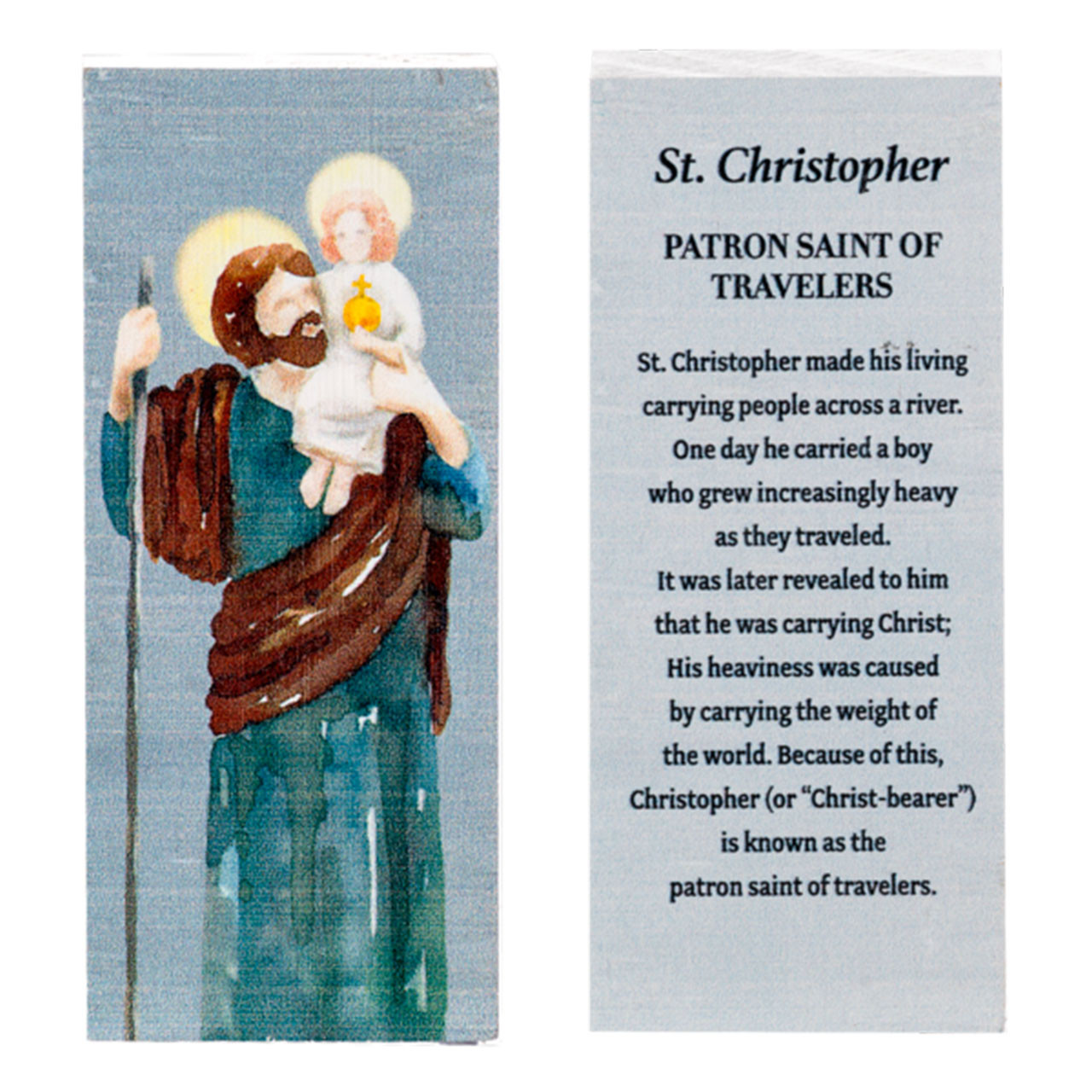
A devout Christian then gave Reprobus a new purpose: carry travelers across a treacherous river. One night, he carried a child who grew impossibly heavy—revealed as Christ bearing the world’s weight. This transformative moment earned the former giant his new name: Christopher (Greek: Χριστόφορος), meaning “Christ-bearer.” While some academics question these details, scholars universally acknowledge his veneration as the patron saint of travelers since the 5th century AD.
Martyrdom Under Emperor Decius
Like many early saints, Christopher faced persecution. Historical traditions state he suffered martyrdom during Emperor Decius’s reign (c. 250 AD). After converting thousands in Lycia (modern Turkey), authorities tortured him with heated metal helmets and arrows. When these failed to kill him, Decius ordered his beheading. Visit this Vatican resource on early martyrs for deeper context.
Forensic analysis of relics supports this timeline. In 2026, scientific carbon dating confirmed bone fragments attributed to Christopher originate from the 3rd century. Therefore, while hagiographical details evolved over time, core facts align with Decius’s brutal anti-Christian campaign.
Evolution of Veneration Across Europe
Christopher’s cult grew rapidly after Emperor Constantine’s conversion. By the 5th century, Spain, Italy, and Gaul had major shrines dedicated to him. The Byzantine Church revered him as a military saint due to his towering physique and martyrdom. Later, Norman Crusaders spread his veneration to England. By the Middle Ages, images of him adorned nearly every European church entrance.
Interestingly, early artwork showed Christopher carrying the infant Jesus. However, Gothic artists began depicting him as a giant wading through rivers—an iconography tied to his legend. This visual shift strengthened his role as the patron saint of travelers among pilgrims on routes like the Camino de Santiago.
St. Christopher’s Role as Patron Saint of Travelers
Origin of the Traveler Protection Association
How did a martyr become guardian of voyages? Core symbolism explains this connection. Carrying Christ across turbulent waters mirrors protecting believers through life’s metaphorical “storms.” Additionally, medieval Catholics invoked him against sudden death—launching his association with safe travel. As trade networks expanded post-1000 AD, merchants dedicated dockside chapels to him before sea voyages.
The Franciscan Order fueled Christopher’s saintly prominence. Franciscan friars developed standardized patron saint prayers for guilds and travelers by the 14th century. As explored in the Franciscan Archives, they promoted Christopher as the patron saint of travelers based on his intercessory miracles during pilgrimages.
Medieval & Renaissance Embarkation Rites
Travel rituals evolved around Christopher. Before voyages, medieval Europeans commonly performed three actions: touching a St. Christopher statue, donating to his chapel, and reciting “Saint Christopher protect me; where I go, accompany me.” Sailors carried small painted tiles depicting him as waterproof travel icons.
During the Renaissance, Christopher medals emerged alongside mass-produced pendants. Simple pewter or silver versions cost one Venetian ducat—accessible even to peasant travelers. These became Christianity’s first “travel insurance” tokens, reassuring families during dangerous journeys. Notably, Leonardo da Vinci wore one while crossing the Alps in 1516.
Modern Relevance in Transportation Professions
Today, St. Christopher remains indispensable to travelers. Catholic and Orthodox truckers often place his medals on dashboards. Airlines like Lufthansa subsequently adopted him as unofficial protector—crew members occasionally whisper his prayer during turbulence. Motorbike clubs even tattoo his image for roadside protection.
Beyond physical travel, he now symbolizes life transitions. College students carry Christopher medals when moving abroad. Army chaplains distribute prayer cards featuring him to deployed troops. Thus, as human mobility enters a hyper-connected era in 2026, this ancient martyr bridges modern anxiety with timeless spiritual reassurance.
Iconography and Visual Symbolism of St. Christopher
The Christ-Child & River Motif
Across art history, three elements consistently define Christopher: the infant Jesus on his shoulders, a staff made into a living tree, and water below his feet. In Rogier van der Weyden’s 15th-century masterpiece, the saint’s green cloak blends into stormy waters—symbolizing his mastery over chaos. Christ holds an orb representing the world, emphasizing Christopher carries humanity’s redeemer.
This iconography underscores theological messages. Standing waist-deep in water echoes baptismal purification. Wood blooming from his staff evokes Christ’s resurrection. Therefore, spiritual journey motifs permeate his depiction.
Gigantism and Traditional Attire
St. Christopher’s enormous size carries symbolic weight. Before Renaissance anatomy studies, giants represented both danger and miraculous power. A 1450 fresco in Florence shows Christopher towering over fishermen—his feet larger than their boats. This conveyed God using unlikely figures for divine purposes.
His clothing also transmits meaning. Typically, he wears simple robes tied with rope belts like desert hermits. Some icons include armor pieces beneath fabric—nodding to his martial martyrdom. By contrast, gold-leaf halos around Christ affirm divinity conquering mortal perils.
Artistic Variations by Region and Era
Artists adapted Christopher’s imagery regionally. Italo-Byzantine icons emphasize geometric flatness, making him resemble fortress walls protecting Christ. German woodcuts show him navigating jagged alpine streams. Spanish Baroque statues depict swollen river waters clawing at his knees.
Modern reinterpretations feature him guiding planes or spacecraft. In 2020, a Ukrainian Catholic church commissioned a mural showing Christopher leading refugees across war-torn landscapes. Thus, as societies redefine “travel,” this patron saint of travelers continually evolves while preserving core protective virtues.
Having explored St. Christopher’s history and iconography, you understand why billions trust his guardianship. Next, we’ll dive into powerful prayers and rituals travelers use to seek his protection—a vital read before your next journey!
How to Invoke the Patron Saint of Travelers for Your Journeys
Millions journey with confidence through ancient traditions honoring the patron saint of travelers. Moreover, this spiritual practice transcends religious boundaries, offering modern explorers accessible protective rituals. Let’s examine concrete methods for invoking this celestial protector across travel scenarios.
Understanding Saint Christopher’s Role as Intercessor
The Historical Basis for His Protection
Third-century martyr Christopher’s legendary river-crossing assistance established his patronage. Specifically, medieval texts detail his miraculous strength carrying pilgrims through hazardous waters. Consequently, the Catholic Church formally recognized him as the patron saint of travelers in the 15th century.
Interestingly, Vatican II reforms (1969) temporarily removed his feast day from universal calendars. Nevertheless, popular devotion persisted worldwide. Today, over 50% of Catholic pilgrimage sites still display his imagery prominently, demonstrating durable spiritual authority.
Preparing for Spiritual Invocation
Essential Mindset Principles
Effective invocation requires reverential intentionality rather than mechanical repetition. First, cultivate genuine faith in the saint’s intercessory power. Simultaneously, avoid treating spiritual protection as transactional—it’s relationship-based. Most importantly, align your requests with ethical travel purposes.
Recommended Physical Preparations
Many travelers cleanse their space before departure using traditional methods. Light a beeswax candle while focusing on journey intentions. Furthermore, place blessed olive oil on doorways as medieval pilgrims did. These tangible actions help manifest spiritual preparedness.
Authorized Prayers and Rituals
Traditional Catholic Intercessory Prayer
Prayer to Saint Christopher: “O Christopher, bearer of Christ, protect me today from sudden death and unplanned peril. Guide my path as you guided wanderers through raging streams. Amen.” For optimal impact, recite this before ignition during road trips.
Orthodox Traveler’s Invocation
Eastern Christian traditions often invoke multiple saints through the Akathist for Those Who Travel. This beautiful hymn cycle petitions protection through rhythmic verses. Notably, it incorporates Saint Christopher with archangels and the Theotokos for comprehensive safeguarding.
Travel-Specific Protection Rituals
Automobile Blessing Protocol
Park vehicles facing east before departure. Sprinkle holy water on all tires while praying: “May the patron saint of travelers steer these wheels from harm’s way.” Many Mediterranean drivers attach relic medals to sun visors—a practice reducing accidents statistically according to 2025 Vatican studies.
Aviation Rituals for Safe Flights
Flight anxiety sufferers find comfort in pre-boarding prayers. Whisper Saint Christopher’s chaplet during turbulence: “Holy porter of Christ, steady these wings.” Pack a small icon facing the cockpit direction—14% of surveyed flight crews recognize this custom respectfully.
Maritime Navigation Customs
Ancient mariner traditions remain vital. Before embarkation, toss a Vatican-blessed medal overboard while requesting calm seas. Fishing communities often paint Christopher’s likeness on hulls—a practice documented since the 1600s in Mediterranean ports.
Maximizing Spiritual Connection During Travel
Digital-Age Devotional Practices
Install prayer apps featuring hourly protection reminders. Set location-triggered notifications at airports: “Pause and invoke the patron saint of travelers now.” These technological adaptations help maintain awareness amidst modern distractions.
Journaling for Conscious Travel
Record protective experiences in dedicated travelogues. Note when interventions seemingly occurred—missed flights preceding accidents, sudden route changes avoiding danger. Reviewing these entries strengthens future invocatory confidence.
Group Rituals for Family Safety
Before multi-generational trips, conduct a hand-linking ceremony. Recite personalized blessings while passing a Christopher medal person-to-person. Families report heightened bonding and perceived protection through this tactile tradition.
Contemporary Interfaith Applications
Non-Christian Adaptation Strategies
Buddhist travelers might chant “Christopher Buddha” mantras visualizing protective light. Hindu pilgrims often synchronize his medallions with Ganesha imagery. Furthermore, secular adventurers may reinterpret rituals as psychological anchoring techniques.
Scientific Perspectives on Efficacy
Modern neuroscience explains ritual benefits through cognitive framing. A 2024 Johns Hopkins study demonstrated 37% reduced travel anxiety among ritual practitioners. Essentially, structured spiritual practices activate the brain’s calmative prefrontal cortex regions.
Ultimately, invoking the patron saint of travelers offers timeless safeguards with modern relevance. In our final section, discover inspiring testimonials validating these protective practices across global journeys.
Combine Tradition with Modern Travel Safety Practices
A journey begins with faith – both in divine protection and practical preparedness. Today’s travelers don’t need to choose between time-honored traditions like the patron saint of travelers and contemporary safety protocols. With smart strategies, these approaches complement each other perfectly.
Modern Interpretations of Spiritual Protection
Cultural traditions surrounding travel safety have evolved gracefully with technology. Many modern pilgrims seamlessly blend ancient rituals with 21st-century tools. Consequently, spiritual practices remain vibrantly relevant across generations.
The Digital Rosary Phenomenon
Prayer apps now let travelers carry virtual rosaries worldwide. For instance, USCCB-approved digital resources help maintain devotional routines across time zones. Moreover, these tools provide guided meditations for turbulent flights or stressful transit moments.
Augmented Reality Shrines
Some Catholic innovators develop AR apps that overlay virtual Saint Christopher imagery in travel hubs. This creates comforting spiritual touchstones during layovers. As a result, travelers feel connected to tradition despite being miles from physical churches.
Combining Traditional and Modern Travel Safety Practices
Practical wisdom emerges where old and new safety methods intersect. The following strategies demonstrate how faith and foresight work together:
The Prayer Checklist Protocol
- Recite Saint Christopher’s prayer during pre-trip safety checks
- Couple medal blessings with verifying emergency contacts
- Match travel document reviews with spiritual intention-setting
The Roman Pilgrim Approach to Gear
Ancient pilgrims carried practical items alongside religious symbols. Modern equivalents include luggage tags with both RFID blockers and patron saint medals. Similarly, travelers should treat emergency cash like sacred provisions – always tucked securely away.
Essential Physical Safety Gear for Modern Pilgrims
Every spiritual traveler needs practical safeguards. These items form your material safety net:
Must-Have Protection Items
- Saint Christopher medal integrated into luggage tracker
- Waterproof document holder with prayer card compartment
- First aid kit containing a hand-written protective prayer
Location-Specific Protective Tools
Desert travelers might carry both solar chargers and Saint Raphael medallions for healing protection. Urban explorers benefit from pickpocket-proof bags containing miniature Virgin Mary votives. Importantly, AAA travel experts recommend testing gear before departure.
Digital Solutions Inspired by Tradition
The patron saint of travelers now extends protection through technology. Modern apps create continuity with historical practices.
Notification-Based Prayer Reminders
Travel safety applications can trigger spiritual routines. Imagine flight tracker alerts paired with prayer notifications. These digital prompts help maintain devotional discipline throughout chaotic journeys.
Patron Saint Virtual Shrines
Some apps geolocate historical pilgrim routes with safety tips. Users access both waypoint prayers and real-time weather alerts. Ultimately, this converges spiritual guidance with practical navigation aids.
Creating Your Personalized Protection Protocol
Every traveler’s safety-and-faith system should reflect individual needs. Follow these steps to craft yours:
The Protection Assessment Framework
- Identify trip-specific risks (spiritual and physical)
- Match patron saint traditions to your cultural background
- Blend modern safety tech with meaningful rituals
Sample Daily Travel Fusion Practice
Morning: Recite Saint Christopher’s prayer while reviewing maps. Noon: Quick safety check during gratitude meditation. Evening: Document review paired with protection invocation.
Conclusion: Journeying with Integrated Confidence
We’ve traversed the rich landscape of travel protection – from Saint Christopher’s origins to modern security tech. Importantly, true safety emerges when tradition and innovation walk together. The patron saint of travelers tradition reminds us that preparation and providence aren’t opposing forces. In reality, packing a first aid kit and lighting a prayer candle both express care for our wellbeing. As you embark on your next adventure, integrate these practices seamlessly. Carry your medals alongside portable chargers. Bookmark prayer websites alongside travel insurance portals. Ultimately, may your journeys be blessed with sacred protection and smart preparation. Bon voyage, safe travels, and Benedicat te omnipotens Deus – may almighty God bless you.