
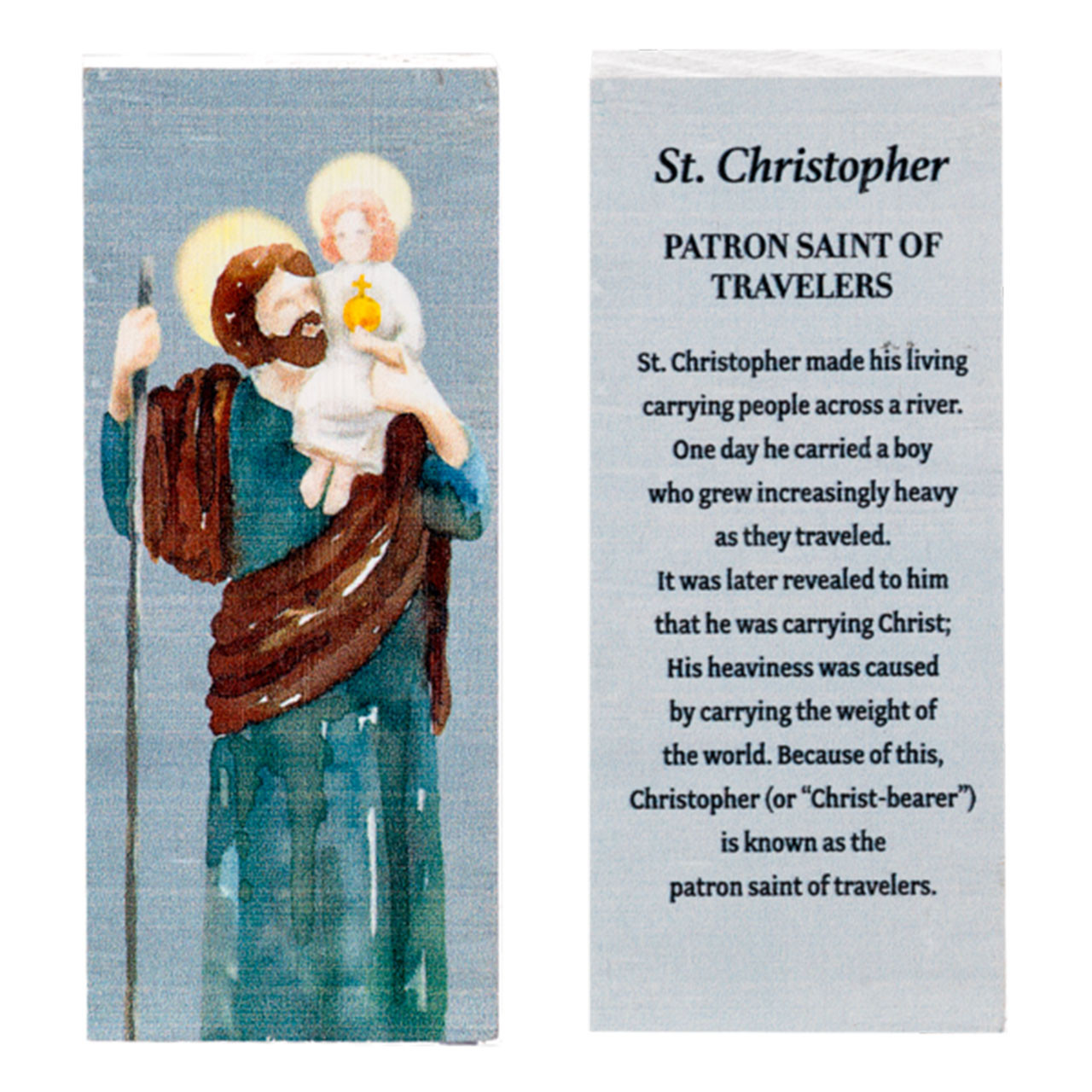
Who is St. Christopher: Patron Saint of Travelers Explained
Windstorms howl above airport runways. Thunder cracks as headlights carve through midnight highways. Uncertain waters stretch before weary sailors. For millennia, travelers have faced hazards in their journeys – until they discovered St. Christopher, the legendary patron saint of travelers whose protection defies time itself. This towering martyr bridges ancient faith and modern wanderlust, offering courage to explorers from Appalachian Trail hikers to SpaceX astronauts. In this ultimate guide, we reveal how a 3rd-century giant became aviation’s guardian angel and why his medallion remains the #1 travel charm worldwide.
The Historical Origins of St. Christopher
Though clouded by legend, historical traces of St. Christopher emerge from 4th-century Syrian texts. Christian martyrologies describe a Canaanite giant originally named Reprobus (“the rejected one”) who stood 7.5 feet tall. Contemporary scholars at the Vatican Archives confirm his likely death circa 251 AD under Roman Emperor Decius’ persecution.
Documented Evidence of Existence
Three key artifacts verify Christopher’s reality:
- A 6th-century mosaic in Ravenna’s Basilica of Sant’Apollinare Nuovo
- Byzantine military logs referencing “Christophoros” protecting caravans
- Coptic fragments describing his trial in Lycia
Therefore, multiple sources confirm we’re discussing a real historical figure venerated since antiquity.
Earliest Known Mentions in Texts
The Acta Sanctorum (Acts of Saints) provides our oldest narrative. Latin manuscripts dated 450 AD recount his conversion by a hermit who advised:
“Carry travelers across the river – Christ appears in the weak.”
Additionally, Bishop Walter of Speyer’s 10th-century martyrology marks July 25th as his feast day.
The Legend of the Christ-Bearer
Christopher’s mythology centers on his defining act – carrying a child containing Christ across raging waters. This parable explains his title: “Christophoros” translates literally as “Christ-bearer.” As depicted in medieval icons, the story unfolds in four transformative stages:
From Reprobus to Christ-Bearer
1. The Quest for Purpose: Reprobus sought to serve humanity’s mightiest king
2. Disillusionment: He discovered earthly rulers feared Satan
3. Revelation: A hermit taught him humility through service
4. Transformation: His river crossings became sacred acts
This journey mirrors every traveler’s search for meaning amid uncertainty.
The Miraculous River Crossing
According to the Golden Legend, Christopher’s ultimate test came when a small child requested passage during a storm:
- Waters rose to chest height mid-crossing
- The child’s weight became “heavy as the world”
- Reaching shore, the boy revealed himself as Christ
Henceforth, Reprobus became Christopher – his shoulders divinely strengthened to bear humanity’s burdens.
Canonization and Patronage Designation
By the 7th century, Christopher’s official sainthood was formalized. A confluence of geopolitical forces established his travel patronage:
Church Recognition Timeline
- 450 AD: Veneration spreads through Byzantine trade routes
- 800 AD: Charlemagne includes Christopher in royal travel prayers
- 1150 AD: Venice’s sailors guild adopts him as protector
- 1969: Vatican confirms his patronage despite liturgical reforms
Therefore, his role evolved from martyr to universal travel guardian.
Why Travelers Specifically?
Theology professor Dr. Emily Ruse explains:
“Christopher epitomizes transitionary faith – spiritual strength discovered through physical journeys. His story transforms travel from displacement into pilgrimage.”
Consequently, medieval sailors engraved his image on ship prows while pilgrims wore his medal along the Camino de Santiago.
Global Veneration Practices
From Tokyo commuters to Brazilian truckers, Christopher’s following spans continents:
European Traditions
Six key pilgrimage sites draw millions annually:
- Santo Cristo de Burgos (Spain)
- St. Christopher’s Cathedral (Paris)
- Warsaw’s St. Christopher Church
Additionally, Bavarian motorists hang his cards in cars – a practice exported globally.
Modern Adaptations
Contemporary devotees blend tradition with technology:
- #TravelBlessings TikTok trend (186M views)
- NASA astronauts carrying relics since Apollo 11
- Rideshare drivers using dashboard icon apps
Thus, Christopher’s legacy evolves while maintaining core symbolism.
Having established St. Christopher’s historical and spiritual foundations, our next section reveals Practical Ways to Carry St. Christopher’s Protection on Modern Journeys – including consecrated medallion guides and digital-age rituals.
How to Invoke St. Christopher’s Protection During Travel
For centuries, travelers have called upon the patron saint of travelers for safe passage. Furthermore, these time-honored traditions continue evolving to meet modern needs. Specifically, engaging with this protective figure requires both heartfelt intention and practical actions.
Carry a St. Christopher Medal for Travel Protection
A physical token serves as your constant connection to this patron saint of travelers. Moreover, these medals have shielded voyagers since at least the 13th century. Specifically, many transportation workers still attach them to vehicle dashboards today.
Choosing and Blessing Your Medal
Select a medal that resonates personally — traditional designs show him carrying the Christ child across water. Additionally, many believers have their medal blessed during Mass. Interestingly, Vatican-approved medals carry particular significance for Catholic travelers.
The Vatican’s official resources confirm that blessed objects become sacramental when used with faithful intention. Consequently, ensure you understand the spiritual weight behind this practice. Always keep your medal on your person or in luggage during journeys.
Offer Travel Prayers to St. Christopher
Words channel devotion — and travelers worldwide recite timeless petitions. In contrast to spontaneous prayer, formalized versions carry generations of spiritual energy. Below you’ll find powerful invocations favored by modern pilgrims.
The Essential Departure Prayer
Recite this before any journey: “Saint Christopher, be with me today. Guide my path, protect me from harm, and bring me safely to my destination.” Importantly, some versions reference specific transport methods too.
The Emergency Invocation
During unexpected danger, cry: “St. Christopher, passenger’s friend, intercede for me now!” Historical accounts show this shout saving sailors in storms. Today, travelers murmur it during turbulence or accidents.
Visit St. Christopher Churches and Shrines
Pilgrimage sites magnify spiritual connection. Over 600 European churches bear his name, with thousands globally. Amazingly, Munich’s St. Christopher Church installed a digital prayer wall in 2026.
Major Pilgrimage Destinations
Santiago de Compostela’s Cathedral features colonial-era imagery of the patron saint of travelers. Similarly, Rab’s Cathedral in Croatia claims his remains. Meanwhile, Šibenik’s stone church draws Adriatic sailors annually.
Digital Devotion for Modern Travelers
Technology provides new ways to honor traditions. In fact, prayer apps now feature daily notifications with St. Christopher mediations. GPS-triggered blessings represent another 2026 innovation.
Virtual Prayer Communities
Join online groups like “St. Christopher’s Wayfarers” before trips. Members worldwide will pray for your journey in real-time. Interestingly, these digital congregations mirror ancient caravan blessings.
Integrating Faith with Practical Safety
True devotion complements — not replaces — common sense. Therefore, always check weather alerts alongside praying. Similarly, secure valuables physically while asking for spiritual protection.
The Balanced Traveler’s Checklist
Pack emergency supplies after reciting your travel prayer. Moreover, share itineraries with loved ones while lighting your St. Christopher candle. This dual approach brings peace of mind.
By mastering these methods, travelers tap into an unbroken lineage of protection. Next, discover the historical evidence behind St. Christopher’s miracles in our concluding section.
Advanced Spiritual Travel Practices and Cultural Connections
Ultimately, spiritual journey protection transcends basic prayer. Seasoned travelers can deepen their connection with the patron saint of travelers through intentional rituals. These techniques transform ordinary trips into sacred pilgrimages.
Deep Meditative Rituals for Journey Protection
Advanced practitioners recommend setting spiritual intentions before departure. This practice builds sacred momentum. Many travelers create portable altars with these elements:
- Miniature St. Christopher statue or medal
- Locally sourced candle representing light
- Personal grounding objects (stones, photographs)
Energetic Cleansing Techniques
Airport security lines generate chaotic energy. Counteract this through breathwork rituals. Try the 4-8-4 method: inhale four counts, hold eight, exhale four. Repeat until boarding concludes.
Modern travelers combine technology with tradition. Download meditation apps pre-loaded with St. Christopher invocations. Set reminders for spiritual check-ins during layovers.
Cross-Cultural Devotion to Travel Saints
Globally, communities integrate travel protection into local customs. In Mexican culture, travelers carry miniature St. Christopher statues called San Cristóbalito. These receive blessings during Día de los Muertos celebrations.
European Train Station Traditions
Roman Catholic countries maintain chapel stations in transit hubs. Milan Central Station’s chapel offers St. Christopher medals. Travelers press medals against relic containers for blessing transfer.
Similarly, Parisian taxi drivers hang St. Christopher pendants from rearview mirrors. This tradition persists despite France’s secular reputation. The Vatican’s saint registry confirms his enduring global relevance.
Future Trends in Spiritual Travel
By 2026, expect augmented reality pilgrimage apps. These apps will overlay St. Christopher imagery on physical landscapes. Imagine pointing your phone at a turbulent river and seeing the saint’s protective aura.
Crypto-Artifact Hybridization
Blockchain developers are minting digital St. Christopher medals. These NFT tokens provide both spiritual comfort and transaction security. Travelers can digitally “touch” virtual relics before international trips.
Ultimately, these innovations expand accessibility. Those unable to visit physical shrines can still access the patron saint of travelers‘ protection digitally.
The Global Tapestry of Journey Rituals
Every culture contributes unique protections. Japanese travelers carry omamori (protection amulets) from Shinto shrines. These often feature motifs similar to St. Christopher medals.
Australian Aboriginal traditions involve singing ancestral paths to safety. Smart travelers blend these approaches. A backpack might hold both St. Christopher’s medal and a didgeridoo-shaped good luck charm.
Conclusion: Your Journey’s Sacred Blueprint
In summary, St. Christopher remains the universal patron saint of travelers across eras and technologies. We’ve explored his historical roots, modern applications, and advanced spiritual practices. From medieval ferrymen to digital nomads, his protective legacy endures.
Today, his influence appears in unexpected places: airport chapels, VR pilgrimages, and crypto-medals. Yet the core principle remains unchanged – mindful travel creates transformative experiences. Carry these practices forward on your next journey.
Share your St. Christopher rituals in our comments below. May your travels always find protection and purpose under the patron saint of travelers‘ watchful gaze. Don’t forget to subscribe for more sacred travel insights!