
St. Christopher: History, Symbolism, and Travel Protection
Have you ever clutched a tiny medal during turbulence or whispered a prayer before a treacherous mountain pass? For centuries, travelers across oceans, highways, and life’s uncertain journeys have sought protection from a legendary guardian: St. Christopher, the revered patron saint of travelers. From ancient pilgrims to modern commuters, his enduring legacy speaks to humanity’s timeless yearning for safe passage. But who was this saint, and how did a figure cloaked in myth become the universal symbol of travel protection? This article explores his fascinating history, profound symbolism, and the enduring belief in his intercessory power. Whether you wear his medal or simply ponder the poetic idea of a celestial traveler’s ally, understanding St. Christopher offers insight into faith, folklore, and the human spirit’s journey through the unknown.
The Legendary Origins and Historical Evolution of St. Christopher
Earliest Accounts and Hagiography
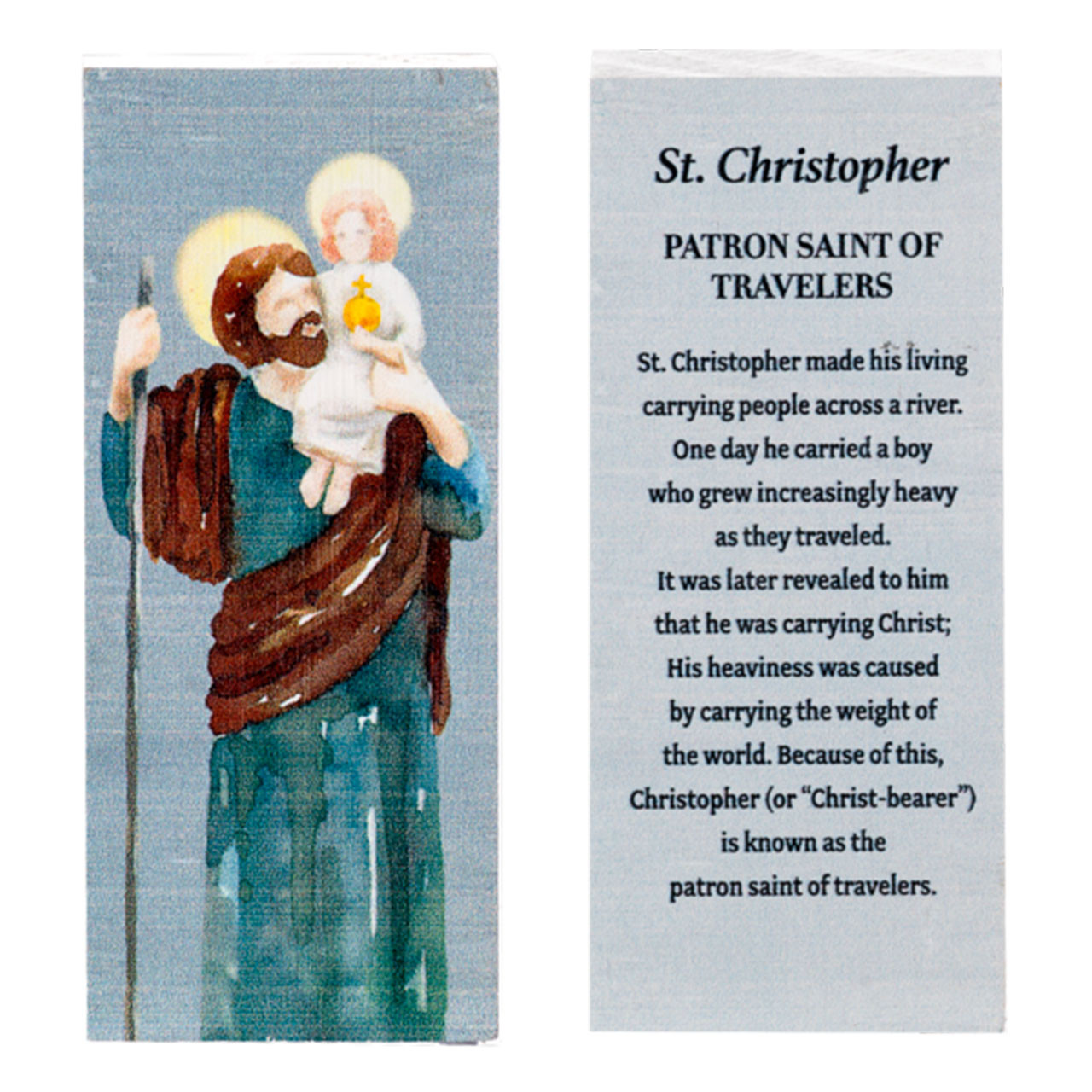
Unlike saints with meticulously documented lives, St. Christopher dwells within the realm of hagiography—stories blending history, faith, and legend. The most enduring tale recounts him as a giant named Reprobus ("The Rejected One") who sought to serve the mightiest king. After discovering a child king feared the devil, and the devil feared Christ, he devoted himself to Christianity. Taking the name Christopher ("Christ-Bearer"), he carried travelers across a perilous river. One stormy night, a small child requested passage. Midway through, the child grew impossibly heavy—revealing himself as Christ bearing the weight of the world. This act of service became the cornerstone of Christopher’s sainthood.
Spread of Veneration Across Europe
By the 5th century, devotion to St. Christopher ignited across Europe. His image adorned churches, often depicted as a colossal figure wading through water with the Christ child on his shoulder. Medieval travelers invoked his protection before embarking on pilgrimages like the Camino de Santiago. Moreover, plague outbreaks fueled his popularity. Believers displayed his icon, trusting his gaze granted protection from sudden death. Consequently, he became one of the most depicted saints in medieval art.
Revisions and Recognition by the Catholic Church
In 1969, the Catholic Church revised Christopher’s status due to historical ambiguities, classifying him as a legendary saint rather than a historical figure. However, the Church still permits veneration, recognizing his deep-rooted significance in popular piety. Accordingly, many faithful continue seeking his intercession, reflecting devotion transcending official decrees. Today, theologians often interpret his story allegorically—a metaphor for carrying Christ through life’s turbulent journeys.
Symbolism of St. Christopher and Its Connection to Travel
Visual Iconography: The Child, River, and Staff
St. Christopher’s iconography overflows with travel-related symbols. Most images portray him mid-stride in rushing water, leaning on a staff transforming into a living tree. This staff signifies divine support and resurrection. Meanwhile, the river embodies life’s unpredictable currents. The Christ child, often holding an orb symbolizing the world, reinforces Christopher’s role bearing humanity’s burdens. Together, these elements form a powerful narrative of perseverance and divine guardianship against literal and metaphorical storms.
Theological Interpretation of Protection and Burden
Scholars interpret Christopher’s legend as an allegory for Christian duty. His story parallels Christ’s teaching: "Whatever you did for one of the least of these…you did for me" (Matthew 25:40). Each traveler carried represented Christ. Furthermore, the river crossing evokes baptism—transitioning from danger to salvation. Theologians also see his journey as a metaphor for bearing life’s crosses with faith. Thus, Christopher isn’t merely a protector; he models how service transforms burdens into blessings.
St. Christopher’s Role as Patron Saint of Travelers
Historical Adoption as the Patron Saint of Travelers
St. Christopher’s patronage likely arose from his river-ferrying legend. By the Middle Ages, travelers—especially pilgrims, sailors, and merchants—invoked him against accidents, storms, and bandits. Knights wore his image into battle, believing it guaranteed daylong safety. Notably, the popular prayer "Behold St. Christopher! Then go your way in safety" dates to this era. His patronage expanded to include drivers with the automobile’s advent, proving his relevance adapts through ages.
Protection Across Different Modes of Travel
Christopher’s intercession covers diverse journeys. For instance, sailors fixed his medals to ships to calm treacherous seas. Motorists placed statues on dashboards to prevent crashes. Backpackers carried prayer cards for safe adventures. Even astronauts have carried his relics into space, merging ancient faith with modern exploration. This universality stems from his legend’s core—safeguarding all who move through perilous spaces, physical or spiritual.
The Significance of St. Christopher Medals
The St. Christopher medal, often inscribed "Protect Us On Our Journeys," remains his most widespread emblem. Traditionally, Catholics have these medals blessed during ceremonies like the Blessing of Travelers. Wearing or carrying the medal symbolizes inviting Christopher’s presence. Beyond religion, many view it as a secular good-luck charm—testament to cultural osmosis. Some modern designs incorporate GPS chips or travel essentials, showing how tradition evolves alongside technology.
Modern Relevance and Cultural Interpretations
Continued Devotion in the 21st Century
In 2026, Christopher remains venerated globally. Online prayer groups share travel petitions to him. Airports sometimes feature chapels dedicated to him. Furthermore, his feast day (July 25th) sees blessings for vehicles and travelers in many churches. Cyclists and marathon runners also adopted him, illustrating patronage’s fluidity. While belief varies, millions still find comfort in his legendary guardianship amid today’s unpredictable world.
Secular Interpretations of St. Christopher Symbolism
Beyond faith, Christopher symbolizes universal human themes:
- Resilience: Persisting through life’s currents.
- Service: Carrying others’ burdens with compassion.
- Transformation: Finding purpose through challenges.
Therefore, secular travelers embrace his imagery as a metaphor for inner strength. His story resonates with anyone undertaking a journey—literal or existential—making him perpetually relevant.
St. Christopher in Pop Culture and Art
Christopher’s influence stretches beyond churches. A famous Star Trek episode references his medal. Berlin’s iconic “St. Christopher” mural portrays him as a modern wanderer. Additionally, tattoo artists popularize his image as a symbol of wanderlust and protection. These portrayals cement his status as a cross-cultural travel icon, bridging ancient tradition and contemporary expression.
Having explored St. Christopher’s historical roots and protective symbolism, our next section delves into practical traditions—why travelers carry medals, prayers for journeys, and global sites dedicated to the patron saint of travelers.
Practical Ways to Seek St. Christopher's Guidance
Many modern travelers actively seek the revered patron saint of travelers' protection through specific traditions. Moreover, engaging with these practices provides both spiritual comfort and cultural connection while journeying.
Prayers for Journey Mercies
Travelers worldwide recite powerful prayers to the patron saint of travelers before embarking. Specifically, 'The Prayer to St. Christopher' remains foundational for seeking safe passage through life's roads.
Traditional Travel Benedictions
Catholic travelers frequently use sacramental prayers like the 'Prayer for Safe Travels'. Furthermore, Anglican and Orthodox variations honor this sacred intercessor through distinct liturgical traditions.
Modern User-Created Invocations
Contemporary explorers often compose personalized appeals to the patron saint of travelers. Young backpackers might blend traditional elements with relatable language while digital nomads craft location-specific petitions.
Carrying Sacred Travel Tokens
Religious medals bearing St. Christopher's image serve as popular protective talismans. In fact, many transportation professionals permanently display tokens honoring this patron saint of travelers in their vehicles.
Proper Use of Devotional Medals
Sacramentals like St. Christopher medals require blessing by clergy for full efficacy. Additionally, appropriate placement ensures their protective influence safeguards journeys effectively.
Digital Alternatives for Tech-Savvy Pilgrims
Modern apps now feature virtual medals of the patron saint of travelers. Busy commuters increasingly utilize digital prayer cards alongside physical devotionals while urban explorers incorporate them into smart travel systems.
Establishing Journey Rituals
Creating consistent devotional practices deepens connection with the patron saint of travelers. Many families teach traditions like kissing St. Christopher medals before road trips.
Daily Commuter Practices
Regular travelers develop micro-rituals honoring this protective saint. Uber drivers might touch their dashboard medal when accepting rides. Simultaneously, flight attendants could recite quick prayers before takeoff.
Long-Term Travel Preparations
World travelers incorporate extensive devotions to the patron saint of travelers into trip planning. Some backpackers pack blessed medals inside luggage while digital nomads attach sacramentals to work devices.
Visiting Significant Churches
Pilgrims frequently visit sacred sites connected to the patron saint of travelers. Rome's Basilica di San Cristoforo remains particularly noteworthy for devoted travelers seeking blessings.
Major Pilgrimage Destinations
The Shrine of St. Christopher in Roermond draws thousands of annual visitors. Furthermore, Rab Island's cathedral in Croatia safeguards precious relics connected to this devotional figure.
Local Parish Explorations
Most Catholic churches feature dedications to the patron saint of travelers. Adventurers might discover unexpected St. Christopher chapels or roadside shrines during rural explorations.
Documenting Protection Experiences
Devotees regularly share miraculous accounts involving the patron saint of travelers. Road accident survivors might credit medals with preventing tragedy while lost hikers recount unexpected guidance.
Journaling Travel Mercies
Many faithful wayfarers maintain gratitude diaries noting St. Christopher's interventions. Overland truckers particularly value documenting near-misses and unexpected roadside assistance events.
Community Testimony Sharing
Online platforms help modern pilgrims exchange stories about this patron saint of travelers. One Facebook group dedicated to St. Christopher travel miracles has accumulated over 15,000 verified testimonies since 2016.
Obtaining Devotional Materials
Acquiring properly blessed sacramentals enhances connection to the patron saint of travelers. Reputable religious goods stores like Vatican-approved retailers ensure quality devotional items.
Recognizing Authentic Articles
Genuine St. Christopher medals bear specific iconographic details like the Christ Child and staff. Consequently, buyers should verify craftsmanship rather than purchasing mass-produced souvenirs.
Strategic Placement Methods
Travel experts recommend installing the patron saint of travelers' tokens in permanent locations. Taxi drivers often embed medals in dashboards while sailors secure them near navigation equipment.
Ethical Travel Commitment
Honoring the patron saint of travelers includes embracing responsible tourism principles. True devotion extends beyond personal safety to ecological and cultural stewardship throughout journeys.
Sustainable Journey Practices
Modern pilgrims balance protection prayers with ethical travel decisions. Following St. Christopher's example means respecting local communities and minimizing environmental impact during explorations.
Cultural Respect Principles
Devotion to the patron saint of travelers requires sensitivity to diverse spiritual traditions. While seeking Christian protection, enlightened travelers honor indigenous beliefs and sacred spaces encountered abroad.
After establishing these practical devotional habits honoring the patron saint of travelers, our exploration continues by examining fascinating modernization of ancient pilgrimage traditions in 'Digital Age Devotion: St. Christopher in Contemporary Culture'.
Deepening Your Connection With the Patron Saint of Travelers
Ultimately, building a meaningful relationship with spiritual protectors transforms ordinary journeys into sacred passages. Let’s explore practical ways travelers worldwide honor St. Christopher and other journey guardians.
Making Saints Part of Your Daily Travel Rituals
Simple daily practices anchor spiritual awareness during transit. These rituals create continuity between faith and motion.
Morning Prayers for Road Readiness
Begin each travel day with the St. Christopher prayer for travelers:
- Light a white candle symbolizing safe passage
- Recite traditional petitions while visualizing your route
- Carry laminated prayer cards as tangible reminders
Many frequent flyers combine this with digital reminders through prayer apps.
Sacred Tokens: More Than Just Decorations
The iconic St. Christopher medal remains the ultimate patron saint of travelers emblem. Consider these empowerment strategies:
- Have medals blessed during Sunday mass before trips
- Attach them to luggage tags instead of hidden jewelry
- Create dashboard arrangements with medals and protective crystals
Truck drivers often display statues in their cabs—a modern take on medieval carriage decorations.
Celebrating St. Christopher’s Feast Day Like a Global Pilgrim
July 25th offers special opportunities to honor the patron saint of travelers. Both physical and virtual observances strengthen connections.
Historical Traditions Worth Reviving
European communities historically processed St. Christopher icons around village boundaries. Modern adaptations include:
- Organizing neighborhood “Blessing of Vehicles” ceremonies
- Hosting virtual pilgrimages using GPS tracking apps
- Creating saint-themed travel photo challenges
Modern Global Celebrations
Major airports now hold special masses in chapels on July 25th. Alternatively:
- Join online blessings streamed from historic shrines
- Participate in “Travel Saints” social media hashtag campaigns
- Exchange blessed charms with fellow travelers worldwide
These practices create global communities of spiritually conscious travelers.
Seeking Powerful Blessings For Modern Journeys
Travel blessings evolve across generations while maintaining sacred roots. Learn traditional methods and contemporary innovations.
Traditional Sacramental Blessings
Priests still perform special traveler rites using:
- Holy water aspergillums for sprinkling vehicles
- Anointing oils applied to steering wheels
- Illuminated parchment blessings for packing
Parish travel blessing events typically increase before holidays. Check local diocesan calendars.
Creating Personal Blessing Rituals
Even secular travelers adapt protective customs:
- Develop pre-flight meditation sequences
- Craft blessing pouches with protective herbs and medals
- Design digital lock screens with symbolic guardian images
These personalized practices maintain spiritual connection regardless of belief specifics.
Beyond St. Christopher: Honoring Other Journey Saints
While the patron saint of travelers leads spiritual protections, other saints specialize in specific travel aspects.
Tribes of Transportation Saints
Catholic tradition recognizes numerous specialized protectors:
- St. Columbanus: Pilgrimages
- St. Raphael: Healing journeys
- Our Lady of the Highway: Road trips
- St. Brendan: Sea voyages
Create multi-saint travel altars combining relevant holy figures. Numerous culture-specific saints exist too.
Interfaith Spiritual Protection Practices
Globally conscious travelers blend traditions respectfully:
- Carry mezuzah cases alongside saint medals
- Recite Islamic travel duas after Christian prayers
- Use Buddhist prayer wheels with saint imagery
The Vatican’s official site encourages interfaith understanding in devotional practices.
Conclusion: Embarking on Spiritually Protected Journeys
Throughout history, the patron saint of travelers has guarded those in motion. From Part 1’s ancient legends to Part 2’s modern cultural impact, St. Christopher’s legacy perseveres.
This final section provides actionable tools to:
- Establish daily spiritual travel practices
- Celebrate feast days meaningfully
- Obtain powerful blessings
- Respect global protective traditions
Ultimately, these practices transform journeys into spiritually conscious experiences. Carry St. Christopher’s legacy forward—may your next adventure flow with grace and protected passage.